Have you ever received a message saying HRU and wondered what it actually means? 🤔 You’re not alone. Modern texting has changed the way people communicate, replacing long sentences with quick abbreviations that save time and make conversations feel casual.
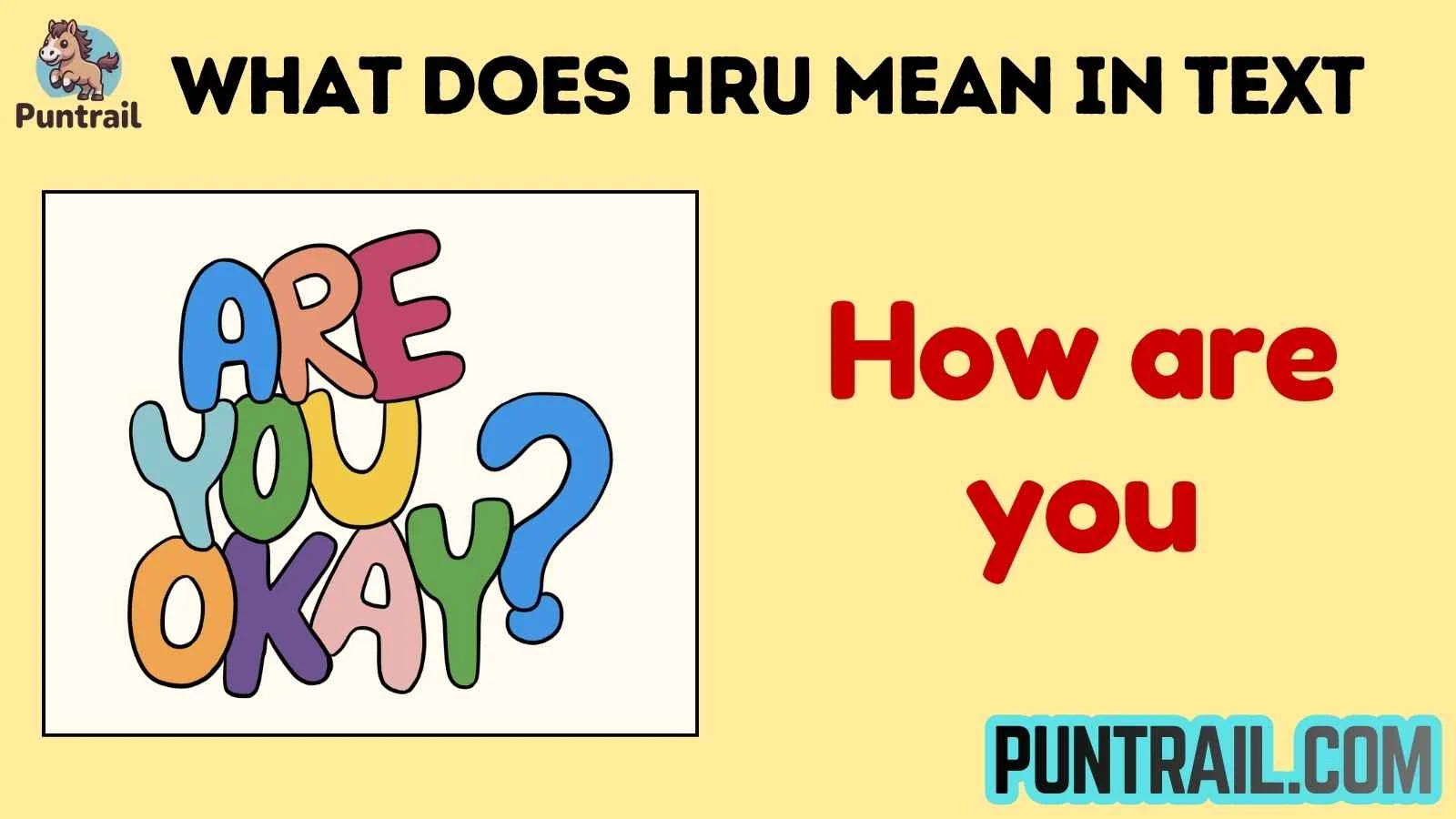
If you’re searching for what does hru mean in text, the short answer is simple: HRU stands for “How Are You?” It’s one of the most common texting abbreviations used in messages, social media, online games, and chat apps. Although it’s short, it helps start conversations and shows someone is checking in on you.
In this complete guide, you’ll discover the meaning of HRU, where it came from, when to use it, how to respond naturally, common mistakes, and real-life examples.
Whether you’re new to texting slang or simply curious, this guide will help you understand HRU like a native texter. 📱✨
Quick Answer: What Does HRU Mean in Text?
HRU means “How Are You?”
People use it as a quick and friendly way to ask someone how they’re doing. Instead of typing three separate words, they simply write HRU.
Example
Friend: HRU? 😊
You: I’m doing great! How about you?
Although the abbreviation is short, the meaning stays exactly the same as asking someone:
- How are you?
- How’s it going?
- How have you been?
- How are things?
Featured Snippet Table
| Abbreviation | Meaning | Used For |
|---|---|---|
| HRU | How Are You? | Greeting someone |
| HBU | How About You? | Returning a question |
| WYD | What Are You Doing? | Starting conversation |
| WYA | Where You At? | Asking someone’s location |
| BRB | Be Right Back | Temporary absence |
HRU is considered one of the easiest and most common internet abbreviations because almost anyone who texts regularly has seen it.
What Does HRU Mean in Text and Why Do People Use It?
The phrase How Are You? has always been a common greeting. As texting became more popular, people started shortening frequently used phrases into abbreviations to type faster.
That’s how HRU became widely used.
Instead of writing:
How are you doing today?
People simply type:
HRU?
The message is shorter, quicker, and still friendly.
Why HRU Is So Popular 📱
People prefer HRU because it:
- Saves typing time
- Makes conversations feel relaxed
- Fits naturally into quick chats
- Works across different messaging platforms
- Is easy for almost everyone to understand
Today, HRU appears in:
- Text messages
- Instagram DMs
- Snapchat
- Messenger
- Discord
- Telegram
- Gaming chats
- Online communities
Its popularity comes from simplicity rather than complexity.
HRU Creates Friendly Conversations
Sometimes people don’t have a specific reason to message someone—they simply want to start talking.
Instead of saying:
“Hello.”
They often say:
“HRU?”
This feels warmer because it invites the other person to respond.
The Origin of HRU
Like many texting abbreviations, HRU developed naturally as digital communication evolved.
During the early years of:
- SMS texting
- Internet chat rooms
- Instant messaging
- Mobile phones
People were often limited by character counts and slow keyboards.
Shortening common expressions became normal.
Some popular abbreviations that appeared around the same time include:
- LOL
- BRB
- BTW
- IDK
- OMG
Eventually, people shortened How Are You? into HRU.
Unlike slang words that constantly change, HRU has remained easy to understand because it directly represents the first letters of each word.
Why It Has Lasted So Long
Many abbreviations disappear over time.
HRU continues to survive because:
- Everyone asks “How are you?”
- It works in almost every conversation.
- It sounds polite.
- It doesn’t depend on trends.
- Every generation understands the question.
This makes HRU one of the most timeless texting abbreviations.
When Should You Use HRU?
Knowing what does hru mean in text is only the first step. Understanding when to use it is equally important.
HRU is best used in casual conversations.
Good Situations to Use HRU ✅
You can use HRU when messaging:
- Friends
- Family
- Classmates
- Teammates
- Gaming friends
- Online communities
- Someone you’ve chatted with before
Example Conversations
Friend:
HRU?
You:
Pretty good! Just finished work.
Cousin:
Hey! HRU?
You:
Doing awesome. How have you been?
Gaming Friend:
HRU today?
You:
Great! Ready to play tonight.
These conversations sound natural because everyone already knows each other.
Situations Where HRU May Not Be Appropriate
Although HRU is friendly, it isn’t always the best choice.
Avoid using HRU in:
- Professional emails
- Job applications
- Academic papers
- Business proposals
- Formal customer support
- Official workplace communication
Instead, write the complete sentence:
How are you?
Using full words creates a more professional impression.
Quick Comparison
| Situation | HRU Appropriate? |
|---|---|
| Texting a friend | ✅ Yes |
| WhatsApp family chat | ✅ Yes |
| Instagram DM | ✅ Yes |
| Snapchat | ✅ Yes |
| Discord server | ✅ Yes |
| School essay | ❌ No |
| Business email | ❌ No |
| Job interview message | ❌ No |
Choosing the right style shows good communication skills.
Different Meanings People Confuse with HRU
Although HRU almost always means “How Are You?”, beginners sometimes think it has another meaning.
Let’s clear up the confusion.
HRU Does Not Mean
- Hurry Up
- Hear You
- Help Requested Urgently
- Human Resources Unit
- High Risk User
These meanings may exist in specialized industries, workplaces, or organizations, but in everyday texting, HRU nearly always means “How Are You?”
Context Matters
Imagine these messages:
HRU?
Clearly asking how someone feels.
Now compare:
The HRU department approved the report.
Here, HRU refers to an internal department or organizational acronym rather than a text abbreviation.
Understanding the surrounding conversation helps determine the correct meaning.
Everyday Texting Example
Alex: HRU today?
Taylor: I’m feeling much better now.
In this conversation, there’s no doubt that HRU means How Are You?
How HRU Fits into Modern Digital Conversations
Texting today is all about speed, convenience, and keeping conversations flowing naturally. 📱 People often use short abbreviations without thinking twice because they have become part of everyday digital language.
HRU is one of those expressions that helps start a conversation without sounding formal or distant. Instead of writing a long greeting, a simple HRU? immediately invites the other person to share how they’re feeling or what they’ve been up to.
Here are a few common ways HRU appears in modern chats:
- HRU? 😊
- Hey! HRU today?
- Long time no talk. HRU?
- Morning! HRU?
- HRU and what have you been doing lately?
Notice that HRU is often paired with friendly greetings like Hey, Hi, or Good morning. This makes the conversation feel more personal and welcoming.
Why People Prefer Short Greetings
There are several reasons why HRU remains popular:
- It’s quick to type.
- It feels casual and friendly.
- It starts conversations naturally.
- It works across almost every messaging app.
- It encourages the other person to reply.
Whether you’re chatting with a close friend, reconnecting with someone after a while, or simply checking in, HRU is an easy way to begin the conversation without overthinking your message.
How to Reply to HRU Naturally 💬
Now that you know what does hru mean in text, the next question is just as important:
How should you respond when someone sends HRU?
There isn’t a single correct reply. Your response depends on your mood, your relationship with the person, and the conversation you want to have.
The best replies are honest, friendly, and conversational. A simple answer often works better than a long explanation.
Simple Replies
These responses are perfect for everyday conversations.
- I’m good! 😊
- Doing great!
- Pretty good, thanks.
- Not bad at all.
- I’m doing well.
- Everything’s going well.
- Feeling great today.
- I’m okay.
- Can’t complain.
- All good here!
Friendly Replies
Want to keep the conversation going? Add a question back.
Examples:
Friend: HRU?
You: I’m doing great! How about you?
Friend: HRU?
You: Pretty good! What have you been up to?
Friend: HRU?
You: Doing well. Hope you’re having a great day too!
Returning the question shows interest and keeps the chat active.
Honest Replies
Sometimes you’re not having the best day, and that’s okay.
Examples:
- I’ve had a busy day, but I’m doing okay.
- A little tired today.
- Not feeling my best, but I’ll be fine.
- It’s been a stressful week.
- Hanging in there.
Being genuine often leads to more meaningful conversations.
Fun and Playful Replies 😄
If you’re chatting with close friends, you can add some humor.
Examples:
- Still alive! 😂
- Running on coffee.
- Surviving Monday.
- Better now that you texted.
- Living the dream… sort of.
These replies make conversations feel more relaxed and enjoyable.
HRU Examples in Real Conversations
Seeing HRU used in context makes it easier to understand how naturally it fits into everyday chats.
Example 1: Friends
Emma: HRU?
Liam: I’m great! Just got home from work.
Emma: Nice! Ready for the weekend?
Example 2: Family
Mom: HRU today?
Son: Doing well. Just finished my homework.
Mom: That’s wonderful!
Example 3: Classmates
Sarah: HRU?
Jake: Pretty good. Have you started the assignment?
Sarah: Almost done.
Example 4: Gaming Friends
Player 1: HRU?
Player 2: Great! Ready for tonight’s match?
Player 1: Absolutely!
Example 5: Reconnecting
Chris: Hey! Long time no talk. HRU?
Alex: I’ve been doing well. It’s great hearing from you!
This type of greeting feels warm and welcoming after a long break.
HRU on Different Social Media Platforms 📱
One reason HRU remains popular is that it works on almost every messaging platform. The meaning stays the same, but the style of conversation can vary depending on where you’re chatting.
HRU on WhatsApp
WhatsApp conversations are usually with friends, family, coworkers, or classmates.
Example:
Hey! HRU today?
This often starts a casual conversation before discussing another topic.
HRU on Instagram
Instagram DMs are generally informal.
Someone might message:
HRU? Haven’t seen you in a while.
This is a friendly way to reconnect after not talking for some time.
HRU on Snapchat
Snapchat focuses on quick, casual interactions.
Examples include:
- HRU?
- HRU today?
- Hey 😊 HRU?
People often send HRU before sharing photos or starting a conversation.
HRU on Facebook Messenger
Messenger conversations can include relatives, old classmates, and friends.
Example:
Hi! HRU these days?
This greeting often leads to catching up on life.
HRU on Discord
Discord communities usually revolve around hobbies, gaming, or shared interests.
Example:
HRU everyone?
or
HRU today, team?
Here, HRU can be directed at one person or an entire group.
HRU in Online Games 🎮
Gamers frequently use abbreviations to communicate quickly.
Example:
HRU? Ready for another match?
The abbreviation keeps messages short without interrupting gameplay.
HRU vs Other Popular Texting Abbreviations
Many texting abbreviations look similar, but each has a different purpose. Understanding the differences helps you communicate more naturally.
| Abbreviation | Meaning | Purpose |
|---|---|---|
| HRU | How Are You? | Ask how someone is feeling |
| HBU | How About You? | Return the question |
| WYD | What Are You Doing? | Ask about current activity |
| WYA | Where Are You? | Ask someone’s location |
| SUP | What’s Up? | Casual greeting |
| GM | Good Morning | Morning greeting |
| GN | Good Night | Evening farewell |
Although these abbreviations are often used together, they each serve a unique role in a conversation.
HRU vs HBU
People sometimes confuse these two.
HRU
Means:
How Are You?
Example:
HRU today?
HBU
Means:
How About You?
Example:
I’m doing great. HBU?
Notice that HBU is usually used after answering someone’s question.
HRU vs WYD
These abbreviations ask completely different questions.
HRU
Asks about someone’s well-being.
WYD
Asks what someone is currently doing.
Example:
HRU?
I’m great!
WYD?
Watching a movie.
HRU vs What’s Up
Both greetings can start conversations, but they aren’t exactly the same.
HRU
Focuses on someone’s condition or feelings.
What’s Up
Usually asks what’s happening or what someone is doing.
Example:
What’s up?
Not much. Just relaxing.
Common Mistakes People Make with HRU ❌
Although HRU is simple, there are a few mistakes that beginners often make.
1. Using HRU in Formal Writing
HRU belongs in casual conversations.
Avoid using it in:
- Business emails
- School assignments
- Professional reports
- Official documents
Writing the full phrase How are you? is much more appropriate in formal situations.
2. Assuming Everyone Knows Text Slang
Not everyone is familiar with texting abbreviations.
Older family members or people who rarely text may not recognize HRU.
If you’re unsure, writing the complete sentence avoids confusion.
3. Ignoring the Message
When someone asks HRU, they’re usually trying to start a conversation.
A short reply is better than leaving the message unanswered.
Even something simple like:
I’m good! You?
keeps the conversation flowing.
4. Overusing Abbreviations
Some people write messages like this:
HRU HBU WYD LOL BRB
While experienced texters may understand, using too many abbreviations at once can make your message difficult to read.
A balanced approach always feels more natural.
5. Forgetting Context
HRU almost always means How Are You?, but context still matters.
For example:
HRU department meeting starts at 10.
Here, HRU is likely an internal organizational abbreviation rather than texting slang.
Always consider the surrounding conversation before assuming the meaning.
Is HRU Polite? 😊
Yes. HRU is generally considered a polite and friendly abbreviation when used in casual conversations.
It shows that you’re interested in the other person’s well-being and want to start a conversation. Even though it’s shorter than writing “How are you?”, the intention is the same.
When HRU Feels Appropriate
HRU works well when messaging:
- Friends
- Family members
- Classmates
- Close coworkers in casual chats
- Online friends
- Gaming teammates
When to Avoid HRU
Choose the full phrase How are you? instead of HRU when communicating in:
- Professional emails
- Formal business messages
- Customer service conversations
- Academic communication
- Official requests
Using complete sentences creates a more professional impression and reduces the chance of misunderstanding.
HRU in Friendships, Dating, and Everyday Conversations ❤️
One reason HRU has remained popular for so many years is its flexibility. It works in almost every casual relationship, whether you’re talking to a close friend, a family member, a classmate, or someone you’re getting to know.
Although the abbreviation always means “How Are You?”, the tone can change depending on the conversation.
HRU Between Friends
Friends often use HRU as a quick check-in before talking about something else.
Example
Friend: HRU?
You: I’m doing great! Just got back from the gym.
Friend: Nice! Want to hang out later?
Here, HRU simply starts the conversation in a friendly way.
HRU Between Family Members
Family members may use HRU when checking on each other during busy days.
Example
Sibling: HRU today?
You: I’m good! Just finished work.
This keeps communication warm and personal without requiring a long message.
HRU in Dating Conversations 💕
If someone you’re interested in texts HRU, they’re usually opening the door for conversation.
Example
Them: Hey 😊 HRU?
You: I’m doing really well! My day’s been busy but good. How about yours?
A thoughtful reply encourages the conversation to continue naturally.
HRU After a Long Time
Sometimes people reconnect after weeks or months.
Example
Alex: Hey! HRU? It’s been forever.
Jordan: I’ve been doing well! It’s great hearing from you again.
In this situation, HRU helps break the ice and makes reconnecting feel comfortable.
Similar Texting Abbreviations You Should Know 📱
If you’re learning what does hru mean in text, you’ll probably come across other common abbreviations too. Knowing them makes online conversations much easier to follow.
| Abbreviation | Meaning | Common Use |
|---|---|---|
| HBU | How About You? | Returning a question |
| WYD | What Are You Doing? | Asking about someone’s activity |
| WYA | Where Are You? | Asking someone’s location |
| IMO | In My Opinion | Sharing an opinion |
| IDK | I Don’t Know | Expressing uncertainty |
| TBH | To Be Honest | Giving an honest opinion |
| TTYL | Talk To You Later | Ending a conversation |
| BRB | Be Right Back | Temporary absence |
| GTG | Got To Go | Leaving a conversation |
| NP | No Problem | Responding politely |
These abbreviations are widely used across messaging apps, online communities, and social media platforms.
Learning a few of them can make digital communication much more comfortable.
Why Texting Abbreviations Like HRU Are So Popular 🌍
Texting has changed dramatically over the years. People now communicate faster than ever, and abbreviations help keep conversations simple and efficient.
HRU is a perfect example because it shortens a common question without changing its meaning.
Benefits of Using HRU
People continue using HRU because it:
- Saves time
- Reduces typing
- Feels casual and friendly
- Fits mobile conversations
- Starts conversations easily
- Works on nearly every messaging platform
- Is understood by millions of users
These advantages explain why HRU has remained a popular abbreviation despite changes in technology.
Easy to Remember
Unlike some internet slang that can be confusing, HRU is easy to understand because it uses the first letter of each word:
- H → How
- R → Are
- U → You
This simple pattern makes it memorable for new users.
Tips for Using HRU Naturally ✨
Using HRU correctly is less about memorizing rules and more about understanding the situation.
Here are a few practical tips to help you sound natural in your conversations.
Use HRU in Casual Chats
HRU works best when talking with people you already know.
Examples include:
- Friends
- Family
- Classmates
- Online gaming friends
- Social media contacts
Match the Other Person’s Style
If someone uses abbreviations, it’s usually fine to reply with abbreviations too.
Example:
Friend: HRU?
You: Good! HBU?
Matching their communication style makes the conversation feel more natural.
Don’t Be Afraid to Write Full Sentences
Not every message needs abbreviations.
Sometimes writing:
How are you doing today?
sounds warmer and more personal.
Choose whichever style best fits the conversation.
Keep Conversations Going
Instead of replying with only:
“I’m good.”
Try adding another question.
Examples:
- I’m doing well! How about you?
- Pretty good! What have you been up to?
- Great! How’s your day going?
This encourages a more engaging conversation.
Use Emojis Naturally 😊
A small emoji can make a message feel friendlier.
Examples:
- HRU? 😊
- I’m great! 😄
- Doing well 👍
- Hope you’re having a good day 🌞
Avoid using too many emojis in one message, as it can make the conversation harder to read.
Quick Summary Table
| Question | Answer |
|---|---|
| What does HRU mean? | How Are You? |
| Is HRU formal? | No, it’s casual. |
| Where is HRU used? | Texts, social media, chats, games, messaging apps |
| Can HRU start a conversation? | Yes, it’s commonly used as a greeting. |
| Should HRU be used in business emails? | No, write the full phrase instead. |
| Is HRU still popular? | Yes, it’s widely used in everyday digital conversations. |
FAQs:
Can HRU have another meaning?
In everyday texting, HRU almost always means “How Are You?” While the same letters may represent different phrases in specific workplaces or organizations, casual conversations almost always use HRU as a friendly greeting.
Is HRU rude or disrespectful?
No. HRU is generally considered polite, friendly, and informal. It’s simply a shorter way of asking someone how they’re doing and is commonly used among friends, family, and acquaintances.
Should I reply to HRU?
Yes. Since HRU is a conversation starter, replying helps keep the interaction going. Even a short response like “I’m good! How about you?” is enough to continue the chat.
Is HRU used by all age groups?
HRU is most common among teenagers and young adults, but many older users who regularly text or use social media also recognize and use it. Its meaning is widely understood across different age groups.
Can I use HRU on social media?
Absolutely. HRU is commonly used on messaging platforms, social media apps, gaming chats, and private conversations where a casual tone is appropriate.
Final Thoughts:
Understanding what does hru mean in text makes online conversations much easier and more natural. HRU simply stands for “How Are You?”, making it one of the most common and recognizable texting abbreviations used today.
Whether you’re chatting with friends, reconnecting with family, sending a quick message on social media, or talking with gaming teammates, HRU is a friendly way to start a conversation.
The key to using HRU effectively is knowing your audience. It works best in casual settings where brief, relaxed communication is expected. In professional or formal situations, writing the complete phrase “How are you?” remains the better choice.
As digital communication continues to evolve, abbreviations like HRU remain popular because they’re easy to understand, quick to type, and help conversations feel more personal.
Now that you know what HRU means, when to use it, and how to respond naturally, you can text with greater confidence and communicate more effectively in everyday online conversations. 😊

I’m the writer behind PunTrail, where I simplify internet slang, text abbreviations, and modern word meanings into easy-to-understand content. I focus on creating clear, human-friendly explanations that help readers quickly understand trending terms used in chats, social media, and everyday conversations.