Have you ever received a message saying “WBU?” and paused for a moment wondering what it meant? 🤔 You’re not alone. Every day, millions of people use texting abbreviations to communicate faster across messaging apps and social media.
Among these popular abbreviations, WBU is one of the easiest to recognize once you know its meaning.
Understanding the WBU meaning in text can make conversations smoother, whether you’re chatting with friends, replying to someone on Instagram, messaging on Snapchat, or texting a coworker. Although it’s short, this abbreviation plays an important role in keeping conversations flowing naturally.
In this complete guide, you’ll learn exactly what WBU means, where it came from, when to use it, when to avoid it, and how it compares to similar texting abbreviations.
You’ll also discover plenty of real-life examples, practical tips, and common mistakes so you can confidently use WBU in everyday conversations.
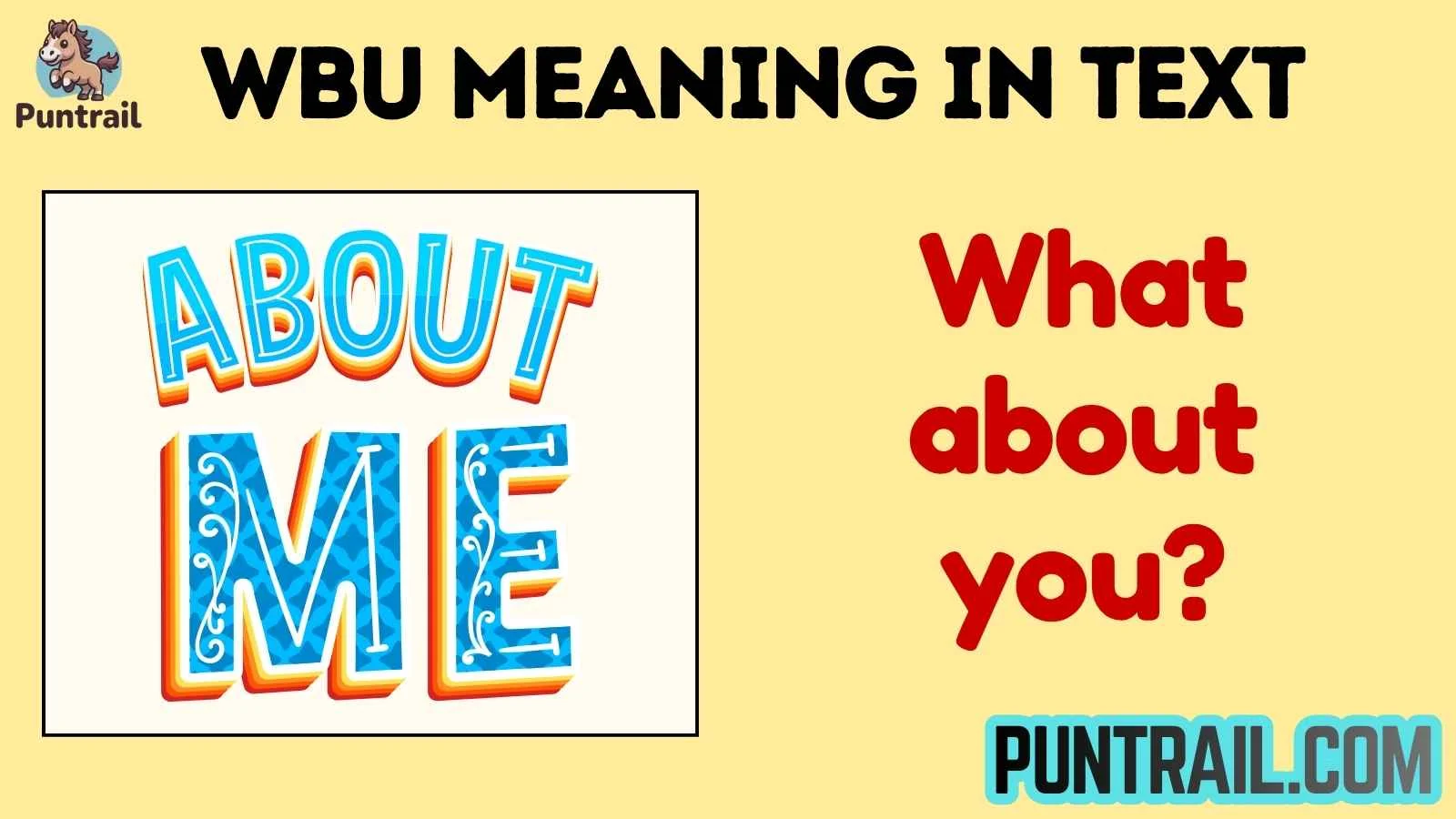
What Does WBU Mean in Text? 💬
WBU stands for “What About You?”
It is a casual texting abbreviation people use after answering a question or sharing information. Instead of asking the entire phrase, they simply type WBU to save time.
Quick Answer
| Abbreviation | Meaning | Tone | Common Usage |
|---|---|---|---|
| WBU | What About You? | Casual | Text messages, social media, online chats |
The abbreviation invites the other person to share their opinion, answer the same question, or continue the conversation.
For example:
Friend: I’m staying home tonight. WBU?
You: I’m going to watch a movie.
Here, WBU simply asks the other person what their plans are.
Because it encourages conversation, WBU is one of the most commonly used texting abbreviations among teenagers, college students, and adults alike.
Why Is WBU So Popular? 📱
Modern conversations happen quickly. Whether you’re texting during a lunch break or chatting on social media, typing fewer words saves time.
That’s one reason the WBU meaning in text has become so popular.
People like abbreviations because they are:
- ✅ Quick to type
- ✅ Easy to understand
- ✅ Friendly and conversational
- ✅ Perfect for casual chats
- ✅ Common across multiple platforms
Instead of writing:
“What about you?”
People simply write:
“WBU?”
The meaning stays exactly the same while requiring fewer keystrokes.
Another reason for its popularity is that it helps keep conversations balanced. Rather than talking only about yourself, asking WBU shows interest in the other person’s thoughts or experiences.
The Origin of WBU 🌍
Like many internet abbreviations, WBU became popular as online communication evolved.
In the late days of SMS texting, mobile phones often had limited character counts. People naturally shortened common phrases to send messages faster and save space.
Some of the earliest widely used abbreviations included:
- LOL
- BRB
- BTW
- IDK
- IMO
- TTYL
- WBU
As instant messaging platforms became more popular, these abbreviations spread rapidly across online communities.
Today, WBU appears on nearly every major communication platform, including:
- Text messages
- Messenger
- Instagram DMs
- Snapchat
- Discord
- Telegram
- X (formerly Twitter)
- Facebook Messenger
- Gaming chats
- Group conversations
Despite changes in technology, the meaning has remained exactly the same:
WBU = What About You?
Its simplicity has helped it remain relevant for years.
When Should You Use WBU? 😊
Knowing the WBU meaning in text is only the first step. Understanding when to use it is just as important.
Generally, WBU is used after you’ve shared your own answer and want the other person to respond.
Common Situations
Talking About Your Day
Alex:
I’m having a busy day at work.
Jamie:
Same here. WBU?
Asking About Weekend Plans
Friend:
I’m visiting my grandparents this weekend.
You:
Nice! WBU?
Discussing Favorite Foods
Emma:
Pizza is still my favorite food.
Noah:
Same! WBU?
Talking About Movies
Person 1:
I watched a comedy last night.
Person 2:
Cool! WBU?
Asking About Hobbies
Chris:
I enjoy photography.
Taylor:
WBU?
Notice a pattern?
The abbreviation almost always appears after someone shares information.
It invites the other person to answer the same question.
What Does WBU Mean on Different Platforms? 🌐
One reason the WBU meaning in text remains popular is its consistency. Unlike some internet slang that changes depending on the platform, WBU keeps the same meaning almost everywhere.
WBU on Snapchat 👻
On Snapchat, WBU simply means What About You?
Example:
I’m at the beach today. WBU?
The sender wants to know where you are or what you’re doing.
WBU on Instagram 📷
Instagram users often include WBU in direct messages or story replies.
Example:
I love this new café. WBU?
They’re asking whether you like it too.
WBU on WhatsApp 💚
WhatsApp conversations are usually casual, making WBU extremely common.
Example:
I’m free after 6 PM. WBU?
WBU on Facebook Messenger 👍
Friends frequently use WBU while chatting.
Example:
I’m watching football tonight. WBU?
WBU in Online Gaming 🎮
Gamers often use abbreviations to communicate quickly.
Example:
I’m playing support. WBU?
WBU in Text Messages 📲
Traditional SMS conversations still use WBU regularly.
Example:
I’m almost home. WBU?
Across every platform, the meaning remains unchanged.
Real-Life Examples of WBU in Conversations 💬
The easiest way to remember the WBU meaning in text is by seeing it used naturally.
Example 1
Emma:
I’m studying for tomorrow’s exam.
Olivia:
Good luck! WBU after that?
Emma:
Probably going out for dinner.
Example 2
Ryan:
I finally finished my project.
Lucas:
Nice! WBU this weekend?
Ryan:
I’m planning to relax.
Example 3
Sophia:
I prefer coffee over tea.
Ava:
WBU during winter?
Sophia:
Still coffee.
Example 4
Liam:
I’m traveling next month.
Ethan:
That’s exciting! WBU after your trip?
Liam:
I’ll be back at work.
Example 5
Friend:
I’m learning Spanish.
You:
That’s awesome! WBU for your next language?
Friend:
Maybe Japanese.
These examples show that WBU works naturally in conversations about hobbies, travel, food, school, work, entertainment, and everyday life. Its flexibility makes it one of the most useful texting abbreviations to know.
Why People Prefer WBU Instead of Writing the Full Phrase ✨
Although writing “What about you?” isn’t difficult, many people still prefer the shorter version.
Here are a few reasons why:
| Full Phrase | Abbreviation |
|---|---|
| What About You? | WBU |
| Longer to type | Faster to type |
| Formal appearance | Casual appearance |
| Better for emails | Better for chats |
| Traditional writing | Modern texting |
Using WBU creates a relaxed, conversational tone that feels natural in messaging apps. It also keeps conversations moving quickly without changing the meaning.
For many people, typing WBU has become second nature, especially when chatting on mobile devices where speed and convenience matter most.
How to Use WBU Correctly in Conversations 💬
Knowing the WBU meaning in text is helpful, but using it naturally is what makes your conversations sound smooth and engaging. Since WBU means “What About You?”, it works best when you want the other person to answer the same question or share their opinion.
A simple rule to remember is this:
Share something about yourself first, then ask WBU.
This keeps the conversation balanced and shows you’re interested in what the other person has to say.
Correct Examples
- I’m having pizza tonight. WBU?
- I finished my homework already. WBU?
- I love action movies. WBU?
- I’m excited for the weekend. WBU?
- I’m thinking about buying a new phone. WBU?
Each example naturally encourages the other person to respond.
Less Natural Examples
Avoid using WBU without any context.
❌ WBU?
While someone might understand what you mean, it’s usually better to include a complete thought first.
✅ I just got home from work. WBU?
This creates a smoother and friendlier conversation.
Common Situations Where People Use WBU 📱
You’ll find WBU in almost every type of casual conversation. It’s incredibly flexible and works for many everyday topics.
Talking About School 🎓
Friend: I have a math test tomorrow.
You: I have a science exam. WBU?
Talking About Work 💼
Coworker: I’m working from home today.
You: I’m at the office. WBU?
Discussing Travel ✈️
Friend: I’m visiting Italy this summer.
You: I’m planning a trip to Japan. WBU?
Talking About Music 🎵
Person: I’ve been listening to pop music lately.
You: I’ve been enjoying jazz. WBU?
Talking About Sports ⚽
Friend: I play soccer every weekend.
You: I usually play basketball. WBU?
Discussing Food 🍕
Friend: Burgers are my favorite.
You: I love tacos. WBU?
Talking About Movies 🎬
Friend: I watched an action movie yesterday.
You: I watched a comedy. WBU?
Talking About Books 📚
Friend: I’m reading a mystery novel.
You: I’m reading a biography. WBU?
These examples show why WBU has become such a common part of modern texting.
Examples of WBU in Everyday Text Messages 💬
Here are realistic conversations where the WBU meaning in text fits naturally.
Example 1
Alex: I’m staying home tonight.
Ben: Same here. WBU tomorrow?
Alex: Probably going hiking.
Example 2
Emma: I finally bought a new laptop.
Sophia: Nice! WBU for your old one?
Emma: I’ll give it to my brother.
Example 3
Chris: I’m watching a football game.
Jordan: Cool! WBU after the game?
Chris: Going out with friends.
Example 4
Olivia: I’m learning graphic design.
Lily: That’s awesome! WBU next year?
Olivia: Maybe web design too.
Example 5
Ryan: I love winter.
Jake: I actually prefer summer. WBU?
Example 6
Emma: I usually wake up at 6 AM.
Noah: I’m more of a night owl. WBU on weekends?
Example 7
Friend: I spend most weekends reading.
You: I usually go hiking. WBU?
Example 8
Person: I enjoy cooking Italian food.
You: I like making Mexican dishes. WBU?
WBU Compared With Similar Texting Abbreviations 🔤
Many texting abbreviations look similar, but each serves a different purpose. Understanding the differences helps you choose the right one.
| Abbreviation | Full Meaning | Purpose |
|---|---|---|
| WBU | What About You? | Ask the other person’s opinion or answer |
| HBU | How About You? | Similar to WBU with a slightly different wording |
| WYD | What Are You Doing? | Ask what someone is doing right now |
| WYA | Where Are You? | Ask someone’s location |
| IDK | I Don’t Know | Express uncertainty |
| IMO | In My Opinion | Share a personal opinion |
| TBH | To Be Honest | Introduce an honest statement |
| LMK | Let Me Know | Request information later |
| BTW | By The Way | Change or add to the topic |
| IKR | I Know, Right? | Show agreement |
Although WBU and HBU are very similar, many people use them interchangeably in casual conversations.
WBU vs HBU: What’s the Difference? 🤔
People often wonder whether WBU and HBU mean the same thing.
The answer is almost yes.
| WBU | HBU |
|---|---|
| What About You? | How About You? |
| More common in texting | Also common in texting |
| Slightly shorter phrase | Slightly more conversational |
| Same purpose | Same purpose |
Examples:
I’m watching Netflix. WBU?
I’m watching Netflix. HBU?
Both sentences sound natural and communicate the same idea.
Most people won’t notice any difference in everyday chats.
Common Mistakes People Make With WBU ❌
Even though WBU is simple, beginners sometimes use it incorrectly.
1. Using It in Formal Emails
Business emails usually require complete sentences.
❌ Please send the report today. WBU?
✅ Please let me know your thoughts.
2. Using WBU Without Context
❌ WBU?
This can confuse the reader.
✅ I’m going shopping later. WBU?
3. Assuming Everyone Knows the Abbreviation
If you’re talking with someone unfamiliar with texting slang, writing the full phrase may be clearer.
Instead of:
WBU?
You can simply write:
What about you?
4. Overusing It
Not every sentence needs WBU.
Using it repeatedly can make conversations feel repetitive.
Instead, vary your responses with phrases like:
- What do you think?
- How about you?
- What’s your opinion?
- What are your thoughts?
- Tell me about yours.
5. Using It in Professional Documents
Reports, presentations, and academic writing should avoid texting abbreviations.
Reserve WBU for casual communication.
Is WBU Formal or Informal? 📝
The WBU meaning in text belongs firmly in the category of informal language.
Here’s where it’s appropriate:
Great Places to Use WBU
- ✅ Text messages
- ✅ WhatsApp chats
- ✅ Snapchat
- ✅ Instagram DMs
- ✅ Facebook Messenger
- ✅ Discord
- ✅ Online gaming
- ✅ Casual conversations
- ✅ Family chats
- ✅ Friends
Better to Avoid WBU
- ❌ Job applications
- ❌ Business emails
- ❌ Academic essays
- ❌ Professional reports
- ❌ Legal documents
- ❌ Formal presentations
- ❌ Official announcements
When communicating professionally, write the complete phrase instead of the abbreviation.
Using the right tone for the situation helps you communicate more effectively and leaves a positive impression.
Different Ways to Say “What About You?” 💭
While WBU is popular, it’s not the only way to invite someone else into the conversation. Depending on the situation, you can use several alternatives that sound just as natural.
| Alternative Phrase | Best Used In |
|---|---|
| What about you? | Casual and formal conversations |
| How about you? | Friendly chats |
| And you? | Quick replies |
| What do you think? | Asking for opinions |
| What’s your view? | Discussions |
| Tell me about you. | Personal conversations |
| What are your plans? | Future events |
| What’s your experience? | Sharing stories |
| How’s it going for you? | Friendly check-ins |
| Your thoughts? | Online discussions |
Using different phrases keeps conversations fresh while still encouraging the other person to participate.
WBU Meaning in Text Across Different Age Groups 👥
Although WBU is widely recognized today, people of different age groups may use it in slightly different ways. Younger users often include it naturally in quick conversations, while older users may prefer writing the full phrase.
Here’s a simple comparison:
| Age Group | How WBU Is Commonly Used |
|---|---|
| Teens | Daily texting, gaming, Snapchat, Instagram, and group chats |
| Young Adults | Messaging apps, social media, casual workplace chats |
| Adults | Text messages, WhatsApp, Facebook Messenger |
| Professionals | Occasionally in informal team chats, but usually avoided in formal communication |
| Older Adults | Less common; many prefer writing “What about you?” in full |
The abbreviation continues to grow in popularity because it’s easy to understand and saves time without changing the meaning of the conversation.
Tips for Using WBU Naturally 💡
If you’re new to texting abbreviations, these tips will help you use WBU confidently.
✅ Share Your Answer First
Instead of only writing:
WBU?
Try this:
I’m going hiking this weekend. WBU?
This provides context and encourages a more engaging conversation.
✅ Match the Conversation Tone
If the conversation is casual, WBU fits perfectly.
Example:
I’m watching a movie tonight. WBU?
If you’re writing something formal, use the complete phrase instead.
✅ Keep It Friendly
WBU works best when you’re genuinely interested in the other person’s response.
Instead of using it simply out of habit, use it to continue the conversation naturally.
✅ Use Proper Punctuation
Although many people simply type:
wbu
Writing:
WBU?
makes the question clearer and easier to read.
✅ Don’t Overuse It
Repeating WBU after every sentence can make a conversation sound repetitive.
Mix it with other expressions such as:
- How about you?
- What do you think?
- What’s your opinion?
- Tell me about your experience.
- What are your plans?
Variety keeps conversations interesting.
Quick Reference Table: WBU at a Glance 📋
If you only remember one section from this guide, let it be this one.
| Feature | Details |
|---|---|
| Full Form | What About You? |
| Meaning | Asking someone to share their answer, opinion, or experience |
| Category | Texting abbreviation |
| Tone | Informal |
| Used In | Text messages, social media, messaging apps, gaming chats |
| Appropriate For | Friends, family, classmates, casual conversations |
| Avoid In | Formal emails, academic writing, business documents |
| Similar Abbreviations | HBU, WYD, WYA, LMK, TBH |
| Purpose | Keep conversations going by inviting a response |
FAQs: ❓
What does WBU mean in text?
WBU stands for “What About You?” It is a casual texting abbreviation used to ask someone the same question after you’ve shared your own answer. You’ll commonly see it in text messages, WhatsApp, Snapchat, Instagram, Discord, and other messaging platforms.
Is WBU rude?
No. WBU is considered polite and friendly in casual conversations. It shows you’re interested in hearing the other person’s opinion or experience. However, because it’s informal, it’s best avoided in professional or academic writing.
Is WBU the same as HBU?
Almost. WBU means “What About You?”, while HBU means “How About You?” Both abbreviations are used in nearly the same way and are often interchangeable in everyday texting.
Can I use WBU in business emails?
No. Business emails, job applications, reports, and other professional documents should use the complete phrase “What about you?” or another formal alternative. Reserve WBU for casual conversations with friends, family, or close colleagues.
What is an example of WBU in a sentence?
Here’s a simple example:
I’m planning to stay home this weekend. WBU?
In this sentence, the speaker shares their plans and then asks the other person to share theirs.
Final Thoughts:
Understanding the WBU meaning in text makes everyday digital conversations easier and more natural. While the abbreviation is short, it plays an important role in keeping chats engaging by inviting the other person to respond.
Whether you’re messaging friends, chatting on social media, or texting family members, WBU is a quick and friendly way to ask, “What about you?”
The key is to use it in the right context. It’s perfect for informal conversations on platforms like WhatsApp, Snapchat, Instagram, Discord, and traditional text messages.
However, it’s best to avoid it in formal emails, business communication, or academic writing where complete sentences are more appropriate.
Now that you know what WBU means, where it came from, how to use it correctly, and the common mistakes to avoid, you can confidently recognize and use this popular abbreviation in your daily conversations.
Like many texting shortcuts, WBU keeps communication simple, fast, and engaging while helping conversations flow naturally.

I’m the writer behind PunTrail, where I simplify internet slang, text abbreviations, and modern word meanings into easy-to-understand content. I focus on creating clear, human-friendly explanations that help readers quickly understand trending terms used in chats, social media, and everyday conversations.