Ever been scrolling through a group chat and suddenly someone drops “KMS” out of nowhere? 😳 Maybe you paused, squinted at your screen, and thought, “Wait… is that as bad as it sounds?”
You’re not alone. Thousands of people search this exact question every single day, and honestly, it’s a fair thing to be curious about. Text slang moves fast, and KMS is one of those abbreviations that looks alarming at first glance but is used in wildly different ways depending on who’s typing it and why.
In this guide, we’re breaking down everything you need to know about KMS what it actually stands for, where it came from, how people use it casually online, when it might signal something more serious, and what you can say instead if you want to keep your texts light and drama-free. 🙌
Let’s get into it.
What Does KMS Mean? ⚡
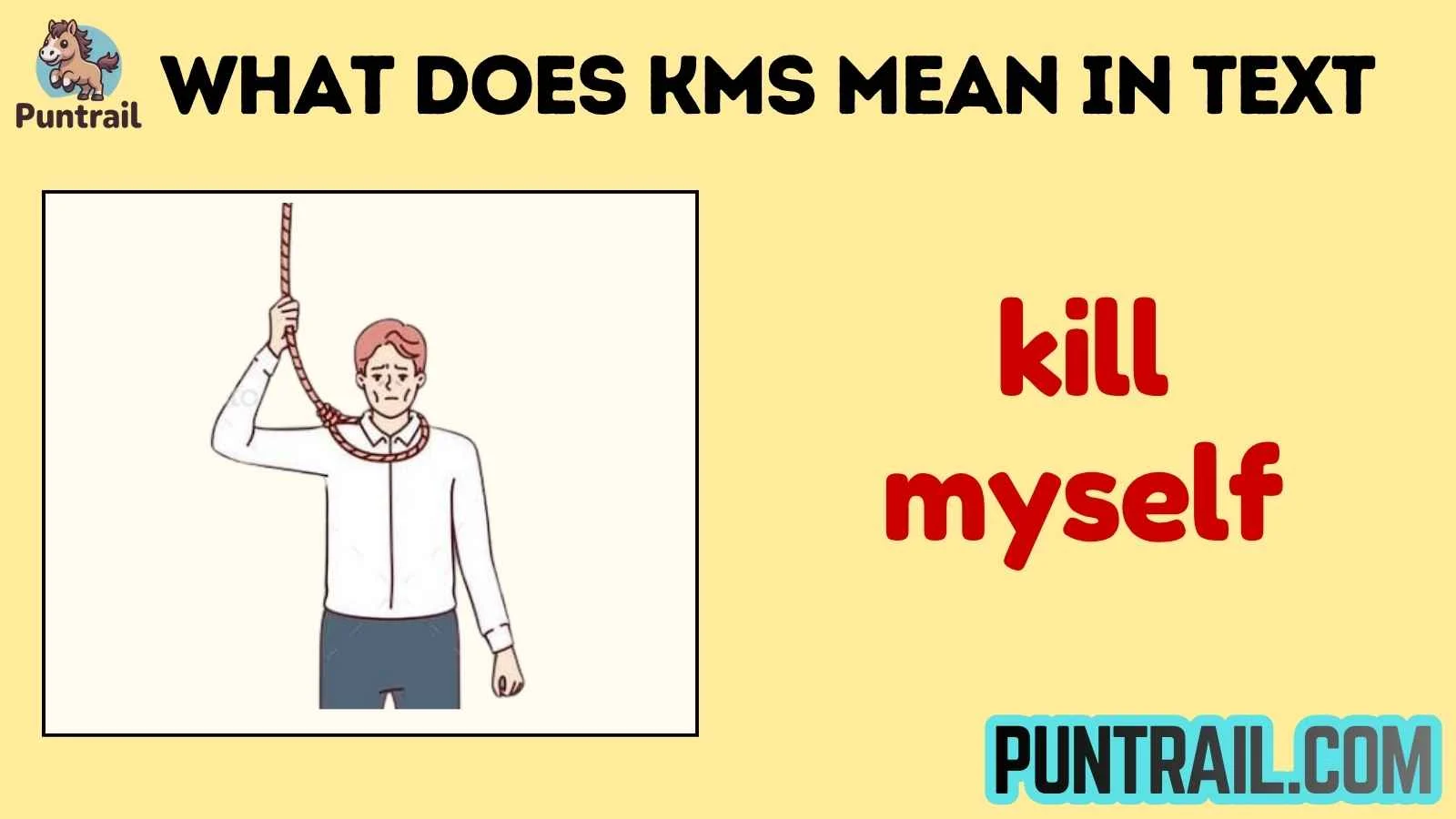
KMS stands for “Kill Myself.”
That’s the literal, word-for-word translation. But here’s the important nuance: in most everyday texting, KMS is used as an exaggerated expression of frustration, embarrassment, or stress not as a literal statement of intent.
Think of it the same way people say “I could just die” after tripping in front of their crush, or “this is going to kill me” before a tough exam. It’s hyperbole. Dramatic, casual, meme-flavored hyperbole.
That said and we’ll dig into this more below context always matters. The same three letters can mean something very different depending on tone, situation, and who’s saying it.
The Origin of KMS: Where Did This Slang Come From? 🕰️
Internet abbreviations rarely have one clean “birthday,” but KMS has been floating around chatrooms, forums, and instant messaging apps since the early-to-mid 2000s, back when AIM (AOL Instant Messenger) and MSN Messenger dominated teen communication.
Back then, typing fast mattered. Character limits, slow typing speeds on flip phones, and a general obsession with abbreviating everything gave birth to a whole dictionary of shorthand: LOL, BRB, TTYL, ROFL and eventually, darker or more dramatic phrases like KMS and its cousin, KYS (“kill yourself”).
As texting and later social media (Twitter, Tumblr, Instagram, TikTok) took over, KMS got absorbed into meme culture. It became less of a literal phrase and more of a reaction expression similar to using a skull emoji 💀 to mean “I’m dead” (as in, “that’s hilarious”).
“Language online evolves through repetition and exaggeration. Phrases lose their literal weight the more they’re used as jokes.” a pattern linguists frequently observe in internet slang evolution.
This is genuinely how a lot of dark-sounding slang works online. It doesn’t excuse it, but it does explain why you see it used so casually.
How People Use KMS in Everyday Texting 😅
Here’s where it gets interesting. In casual conversation, KMS rarely means what it literally spells out. Instead, people use it as a stand-in for embarrassment, annoyance, stress, or comedic despair.
Some common everyday triggers for a casual “KMS”:
- 📚 Forgetting to study for a huge test
- 💔 Getting left on read by a crush
- 🚗 Missing the bus for the third time this week
- 😬 Saying something cringey in front of the whole class
- 💻 A laptop crashing right before a deadline
- 🐶 Watching your dog eat your homework (yes, really)
In these situations, KMS functions almost like an emotional exclamation point. It’s the texting equivalent of throwing your hands up and going, “Ugh, why me?!”
Example conversation:
Mia: just spilled coffee all over my white shirt right before the interview Jess: KMS 😭 that’s literally the worst timing ever Mia: I KNOW. I might just cry in the bathroom for five minutes
Notice how Jess isn’t expressing genuine concern for self-harm he’s commiserating over bad luck. That’s the core function of casual KMS: shared dramatic sympathy.
KMS vs Other Similar Internet Slang 🧩
To really understand KMS, it helps to see it next to similar abbreviations. Some are playful, some are more sensitive, and knowing the difference protects you from awkward mix-ups.
| Abbreviation | Meaning | Typical Tone |
|---|---|---|
| KMS | Kill myself | Dramatic, exaggerated, often joking |
| KYS | Kill yourself | Harsher, often used as an insult — avoid using this one |
| FML | F*** my life | Frustration, bad luck |
| SMH | Shaking my head | Disbelief, disappointment |
| LMAO | Laughing my a** off | Genuine amusement |
| IDK | I don’t know | Uncertainty |
| ISTG | I swear to god | Emphasis, frustration |
| 💀 | “I’m dead” (emoji) | Something is extremely funny |
Notice that KYS is a different beast entirely. Where KMS is usually self-directed and joking, KYS is aimed at someone else and can come across as genuinely hostile — even when the sender claims they’re joking. It’s generally best to avoid using KYS altogether, even in jest, because it can land as a real insult rather than a harmless one.
Is KMS Meant to Be Taken Literally? 🤔
Here’s the honest, balanced answer: usually not — but sometimes, yes.
Most of the time, when a friend texts “KMS” after a bad grade or an awkward moment, they are not expressing an actual desire to harm themselves. It’s closer to comedic exaggeration, the same emotional register as “I’m literally dying” or “this is actually killing me.”
However, tone and context change everything. A few signs that “KMS” might reflect something more serious rather than a joke:
- 🚩 It’s said repeatedly, not just once in a funny moment
- 🚩 It comes with other signs of distress (withdrawing, sadness, hopelessness)
- 🚩 There’s no punchline or lighthearted follow-up — it feels flat or serious
- 🚩 The person seems to genuinely be struggling in other parts of the conversation
- 🚩 It’s said in response to something heavy (a breakup, loss, isolation) rather than something silly
If any of that rings true, please take it seriously, even if the person insists they’re “just joking.” It’s always okay to check in and ask, “Hey, are you actually okay?” A simple, caring question can open the door for someone to be honest with you.
Sensitive note: This article explains KMS purely as an internet-slang topic. If you or someone you know is genuinely struggling with thoughts of self-harm, please reach out to a mental health professional or a crisis support line in your country — you deserve real support, not just a text back.
Different Contexts Where You’ll See KMS 📱
KMS shows up in a surprising variety of places online, and the meaning shifts slightly depending on the platform and setting.
1. Group Chats and Texting
This is the most common home for casual KMS usually reacting to something embarrassing, stressful, or chaotic that happened during the day.
2. Gaming Chats 🎮
Gamers use KMS constantly after losing a match, missing an easy shot, or getting outplayed. It’s practically a reflex reaction in competitive gaming culture.
“KMS, I missed that clutch shot by ONE pixel.”
3. Social Media Comments (TikTok, Instagram, X)
On social platforms, KMS often appears under relatable memes, cringe compilations, or “when this happens” content again functioning as comedic emphasis rather than literal expression.
4. Study or Work Stress Posts 📚💼
Students and workers alike drop KMS under posts about finals week, tight deadlines, or Monday mornings. It’s basically shorthand for “I am completely overwhelmed right now.”
Real Examples of KMS in Conversation 💬
Let’s look at a few natural, realistic examples to see how flexible this slang really is:
Example 1 — Academic Stress
“Just found out we have THREE exams in one day. KMS 💀”
🧠 Example 2 — Social Embarrassment
“I called my teacher ‘mom’ in front of the whole class KMS I want to disappear”
Example 3 — Gaming Frustration
“Lost a 20-game win streak because of lag. KMS.”
🧠 Example 4 — Everyday Annoyance
“My phone died right when I needed the address. KMS, classic.”
In every one of these, the underlying feeling is frustration or embarrassment, not genuine crisis. That pattern is exactly why the phrase spread so widely — it’s short, dramatic, and instantly relatable.
Why You Should Still Be Careful Using KMS ⚠️
Even though KMS is often harmless in casual conversation, there are a few solid reasons to think twice before using it — or to use it thoughtfully:
- 🧠 Not everyone reads tone the same way. A joke to you might read as genuinely worrying to someone else, especially people who don’t know your texting style well.
- 👥 It can minimize a serious topic. Repeated casual use of self-harm language, even jokingly, can make it harder to recognize when someone means it for real.
- 💼 It doesn’t always translate well professionally. Using KMS in a work Slack channel or a text to a teacher, for instance, can come across as unprofessional or alarming.
- 🫂 It might worry the people who love you. Parents, partners, and close friends may not clock the joke immediately, and a moment of real concern isn’t fun for anyone.
None of this means you need to panic every time you see it in a meme comment section but a little awareness goes a long way. 🌱
What to Do If Someone Sends You a Serious-Sounding KMS 🫶
If your gut tells you that a “KMS” text wasn’t a joke, here’s a simple, caring way to respond:
- Don’t ignore it or brush it off. Even if you’re unsure, checking in costs nothing.
- Ask directly and gently. Something like, “Hey, that sounded heavier than usual — are you okay?” works well.
- Listen without judgment. Let them talk without jumping straight to advice.
- Encourage professional support. Suggest talking to a counselor, therapist, or trusted adult if things feel serious.
- Don’t try to handle it entirely alone. If you’re genuinely worried about someone’s safety, involve a trusted adult, school counselor, or a crisis line in your region.
A quick, sincere check-in text can mean more than people realize. 💛
Alternatives to KMS You Can Use Instead ✨
If you like the energy of KMS but want something a little lighter (or more office-appropriate), here are some fun swaps:
- 😩 “I’m dying” (classic, still widely understood as a joke)
- 💀 Just the skull emoji
- 🙃 “Why is this my life”
- 😭 “I can’t even”
- 🤦 “Facepalm moment”
- 🫠 The melting face emoji
- “Send help” 🆘 (playful, not literal)
These options keep the same dramatic, funny energy without leaning on language tied to self-harm which can be a nice habit to build, especially in mixed-audience chats.
KMS Across Different Platforms 🌐
| Platform | Common Usage Style |
|---|---|
| Comment reactions on relatable/cringe content | |
| TikTok | Captions or comments under funny “fail” videos |
| Twitter/X | Quick reactions to news, sports, or personal mishaps |
| Snapchat | Casual private texting between close friends |
| Discord/Gaming chats | Instant reaction to losing or missing a play |
| WhatsApp/iMessage | Group chat banter about daily frustrations |
Each platform has a slightly different “vibe,” but the core usage — dramatic exaggeration — stays remarkably consistent across all of them.
Quick Recap Table: KMS at a Glance 📋
| Question | Answer |
|---|---|
| What does KMS stand for? | Kill Myself |
| Is it usually literal? | No, usually exaggerated/joking |
| When should you take it seriously? | Repeated use, flat tone, signs of real distress |
| Common platforms | Texting, gaming chats, social media |
| Safer alternatives | “I’m dying,” 💀, “send help,” 🫠 |
FAQs: ❓
1. What does KMS mean in a text from a friend? It usually means “kill myself” used as an exaggerated joke about stress, embarrassment, or bad luck not a literal statement.
2. Is KMS the same as KYS? No. KMS (“kill myself”) is self-directed and typically joking, while KYS (“kill yourself”) is aimed at someone else and can come across as genuinely hostile, even when meant playfully.
3. Should I be worried if someone texts me KMS? Not always but pay attention to tone and context. If it feels repetitive, serious, or paired with other signs of distress, it’s worth gently checking in.
4. Where did the slang KMS come from? It emerged from early 2000s instant messaging culture and later spread through texting, gaming chats, and social media as internet slang evolved into shorter, punchier expressions.
5. What can I say instead of KMS? Try lighter alternatives like “I’m dying,” the 💀 skull emoji, “send help,” or “I can’t even” same dramatic energy, less heavy language.
Final Thoughts:
So, what does KMS mean in text? At its core, it stands for “kill myself,” but in the vast majority of everyday conversations, it’s used as dramatic slang a quick, punchy way to express embarrassment, stress, or frustration, much like saying “I could just die” after a rough day.
That said, context is everything. The same three letters can carry very different weight depending on tone, repetition, and what’s actually going on in someone’s life. A little awareness knowing when it’s a joke and when it might be something more makes you a more thoughtful texter and a better friend. 🫶
Language online moves fast, and slang like KMS is a perfect example of how words shift meaning through humor and repetition.
Now that you know the full story the origin, the everyday usage, the warning signs, and some lighter alternatives you’re fully equipped to navigate it with confidence the next time it pops up in your DMs. 💬✨

I’m the writer behind PunTrail, where I simplify internet slang, text abbreviations, and modern word meanings into easy-to-understand content. I focus on creating clear, human-friendly explanations that help readers quickly understand trending terms used in chats, social media, and everyday conversations.