Have you ever received a message that made you think, “I really did not need to know that”? 😅 In today’s fast-moving digital conversations, people often share thoughts, stories, and personal details instantly. Sometimes those details become a little too much information for the person reading them.
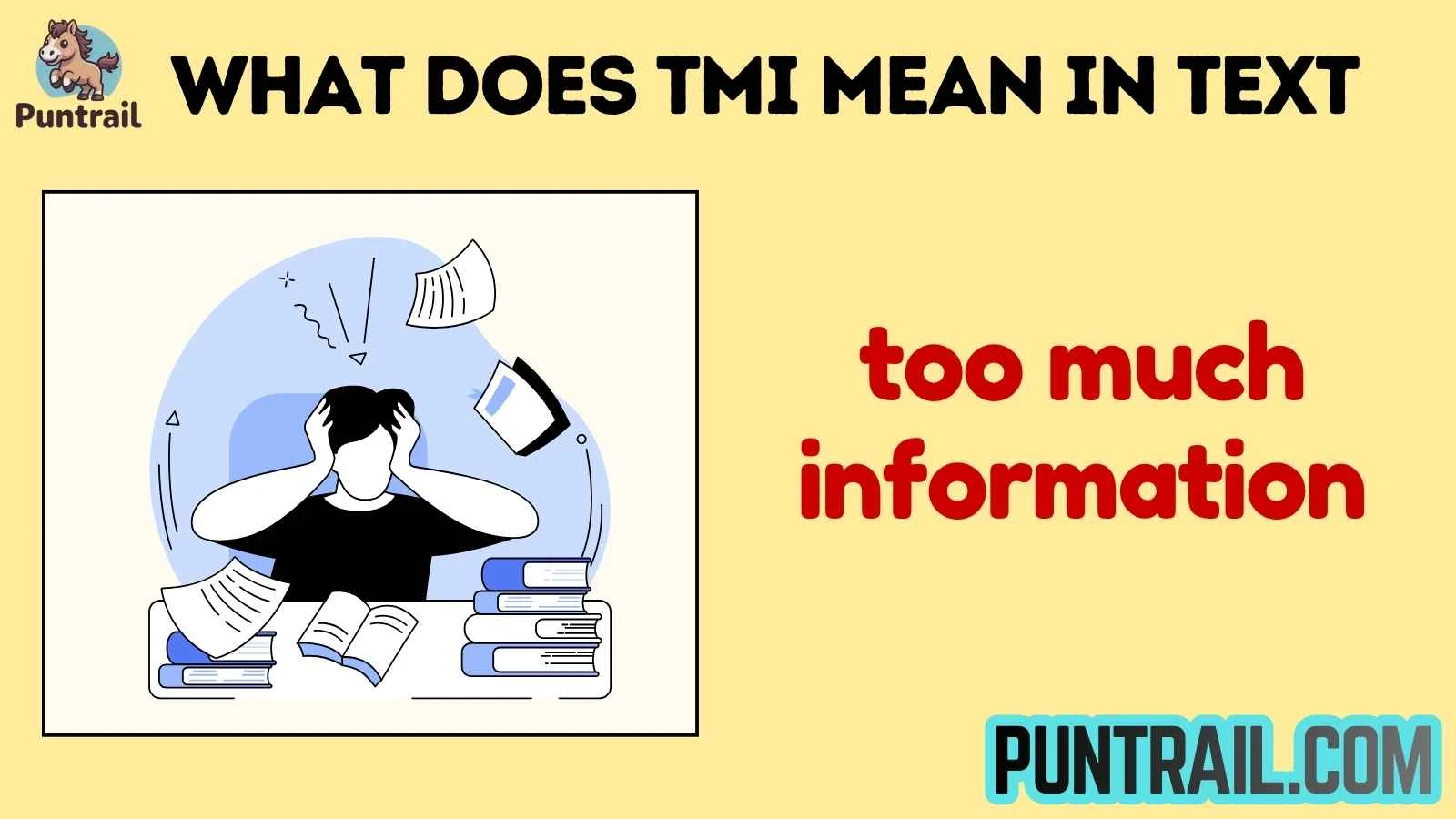
If you are wondering what does TMI mean in text, the answer is simple: TMI stands for “Too Much Information.” People use this abbreviation in chats, social media comments, and online conversations when someone shares unnecessary, overly personal, or surprising details. 📱
Understanding TMI meaning in texting helps you communicate better online. It can be used seriously, jokingly, or playfully depending on the situation.
This guide explains everything about TMI, including its origin, examples, proper usage, and how this popular texting abbreviation fits into modern digital communication. 😊
What Does TMI Mean in Text Messages?
TMI means “Too Much Information” in text messages and online conversations. It is a common internet slang abbreviation used when someone shares details that feel excessive, private, awkward, or unnecessary.
People usually write TMI when a conversation crosses a comfort level. It does not always mean something negative. Sometimes friends use it humorously when someone tells an embarrassing story or shares a funny personal detail.
For example:
Friend: I ate so much pizza last night that I couldn’t move from the couch for three hours.
Reply: TMI 😂
In this situation, the person is not angry. They are simply joking that the information was more detailed than needed.
The meaning of TMI can change depending on the tone, relationship, and context.
Common meanings of TMI include:
- Too Much Information 😅
- More details than necessary
- An oversharing moment
- A funny reaction to personal information
- A playful way to say “I didn’t need to know that”
In texting culture, abbreviations like TMI save time while adding emotion and personality to conversations.
What Does TMI Stand For in Chat and Social Media?
In chat platforms, messaging apps, and social media, TMI stands for “Too Much Information.”
People commonly use it on:
- Text messages
- Social media comments
- Group chats
- Online forums
- Gaming chats
- Memes
- Casual conversations
The abbreviation became popular because online communication moves quickly. Instead of typing a full sentence like:
“That is more information than I wanted to hear.”
Users simply type:
“TMI 😭”
This short form communicates a complete reaction instantly.
Examples of TMI in digital conversations:
| Conversation | Response |
|---|---|
| My dentist appointment was so painful I described every single detail to my family. | TMI 😬 |
| I haven’t washed my hair in five days. | TMI 😂 |
| I just told everyone my embarrassing childhood story. | TMI |
| My pet wakes me up by licking my face every morning. | TMI but cute 🐶 |
The phrase works because people understand the emotional meaning behind it without needing extra explanation.
The Origin and History of TMI
The phrase “Too Much Information” existed before texting and internet slang became popular. People used it in everyday conversations when someone shared unnecessary details.
However, the abbreviation TMI became widely recognized with the growth of online communication, chat rooms, forums, and instant messaging.
During the early internet era, people started creating shorter versions of common phrases to communicate faster. Similar abbreviations included:
- LOL – Laugh Out Loud
- BRB – Be Right Back
- OMG – Oh My God
- BTW – By The Way
- TMI – Too Much Information
As texting became a major part of daily life, TMI became a familiar reaction phrase.
Today, younger generations often use TMI casually and humorously. It has moved beyond simple texting and appears in social media captions, videos, memes, and everyday speech.
The evolution of TMI shows how digital communication creates new ways to express emotions quickly.
Why Do People Use TMI in Texting? 🤔
People use TMI in text messages for several reasons. The abbreviation is not only about stopping a conversation. It can also show humor, surprise, friendliness, or exaggeration.
Here are the main reasons people use TMI:
1. To React to Oversharing
Sometimes people reveal very personal details. TMI becomes a quick reaction.
Example:
Person A: I accidentally waved back at someone who wasn’t waving at me.
Person B: Not TMI, just hilarious 😂
2. To Make a Joke
Friends often use TMI playfully.
Example:
Friend: I brushed my teeth for exactly 7 minutes because I counted every second.
Reply: TMI but impressive 😆
3. To Show Surprise
A person may type TMI because they did not expect such a detailed story.
Example:
Friend: My entire family knows about my awkward first date.
Reply: TMI 😳
4. To Create a Funny Reaction
On social media, TMI is often used as a humorous comment.
Example:
Someone posts:
“My dog follows me everywhere, even when I’m trying to shower.”
Comment:
“TMI 😂”
The commenter may actually find the post funny rather than uncomfortable.
How to Use TMI Correctly in Text Conversations
Using TMI correctly depends on understanding the relationship and situation. Since the phrase can sound playful or rude, it is important to consider the tone.
TMI is usually appropriate when:
Talking with close friends
Responding to funny personal stories
Joining casual online conversations
Reacting to memes or jokes
Making a lighthearted comment
Example:
Friend: I accidentally sang loudly in the shower and my neighbor heard me.
You: TMI 😂 but that’s funny.
Avoid using TMI when:
Someone is sharing a serious problem
A person is opening up emotionally
The topic is sensitive
You do not know the person well
For example, if someone shares a personal struggle, replying only with “TMI” may seem dismissive.
Good communication requires knowing when humor is appropriate.
TMI Meaning: Is It Rude or Funny?
A common question people ask is whether TMI is rude.
The answer depends on the situation.
TMI can be funny, friendly, or slightly rude depending on how it is used.
Friendly use:
Friend: I cried during a cartoon movie because the ending was emotional.
You: TMI 😂 (I love that though)
This feels playful.
Rude use:
Someone shares a personal concern.
Person: I’ve been struggling lately and needed someone to talk to.
Reply: TMI.
This response may feel insensitive because the person was not oversharing; they were seeking support.
The key difference:
Tone + relationship + context determine the meaning.
A laughing emoji, friendly conversation, or close friendship can make TMI harmless. A serious situation requires more empathy.
Common Examples of TMI in Text Messages
Seeing real examples makes the meaning easier to understand. Here are different ways people use TMI in conversations:
Funny Examples 😂
- I ate an entire cake before my birthday party started. TMI
- My cat watches me sleep like a tiny security guard. TMI 😹
- I practiced my speech in front of the mirror for two hours. TMI but relatable
- I still sleep with my childhood blanket. TMI 😂
Casual Examples
- I forgot my password again. TMI, but my brain is tired.
- I spent my whole weekend organizing my closet. TMI
- I watched ten episodes in one night. TMI but worth it.
Social Media Examples
- Caption: My coffee addiction is getting serious.
- Comment: TMI ☕😂
- Caption: My dog steals my pillow every night.
- Comment: TMI, but adorable 🐕
How Is TMI Different From Other Texting Abbreviations?
In modern digital communication, many abbreviations look similar because they express reactions or emotions. However, each slang term has a different purpose. Understanding these differences helps you use the right phrase in the right situation. 📱✨
While TMI meaning in texting focuses on receiving unnecessary details, other abbreviations may show confusion, surprise, laughter, or agreement.
Here are some common differences:
| Text Abbreviation | Meaning | When It Is Used |
|---|---|---|
| TMI | Too Much Information | When someone shares excessive or personal details |
| LOL | Laugh Out Loud | When something is funny |
| OMG | Oh My God | When reacting with surprise |
| BTW | By The Way | When adding extra information |
| FYI | For Your Information | When sharing useful details |
| IDK | I Don’t Know | When someone is unsure |
| TBH | To Be Honest | When sharing an honest opinion |
The main difference is that TMI reacts to the amount or type of information shared, while other abbreviations react to feelings, opinions, or facts.
For example:
Friend: I just bought a new phone.
Reply: OMG, that’s awesome!
This is not TMI because the information is normal and relevant.
But:
Friend: I cleaned my room and found a snack from three years ago under my bed.
Reply: TMI 😭
This reaction makes sense because the detail is unexpected and unnecessary.
What Are the Different Ways People Use TMI Online? 🌐
The meaning of TMI in chat can change depending on the platform and audience. The same abbreviation can feel different in a private message compared to a public comment.
TMI in Private Text Messages
In private conversations, friends often use TMI as a joke.
Example:
Alex: I just realized I have been wearing my shirt backward all day.
Sam: TMI 😂
Here, TMI creates humor and shows a relaxed friendship.
TMI in Group Chats
Group chats often contain playful conversations where people share random thoughts.
Example:
Person 1: I have eaten the same breakfast every day for six months.
Person 2: TMI but honestly impressive.
The abbreviation keeps the conversation fun without creating a serious interruption.
TMI on Social Media
On platforms where people share daily updates, TMI is commonly used in comments.
Example:
Post:
“Today I learned my dog snores louder than my dad.”
Comment:
“TMI 😂🐶”
The commenter usually means the post is funny, not that it is actually a problem.
TMI in Memes and Online Humor
Internet culture often exaggerates personal information for comedy. TMI became popular because it works well as a reaction meme.
Examples:
- Someone sharing an embarrassing childhood story → TMI
- A funny but unnecessary detail → TMI
- An awkward confession → TMI 😭
It has become part of online humor language.
TMI Examples for Different Situations
Learning what does TMI mean in text becomes easier when you see how people use it in everyday conversations.
Example 1: Funny Oversharing
Person A: I waved at someone for five seconds before realizing they were waving at the person behind me.
Person B: TMI 😂
Meaning:
“You shared an unnecessary but funny detail.”
Example 2: Personal Information
Person A: I told my entire family about my embarrassing mistake at work.
Person B: TMI 😅
Meaning:
“That was more personal information than expected.”
Example 3: Cute Situation
Person A: My puppy follows me everywhere, even when I brush my teeth.
Person B: TMI but adorable 🐶
Meaning:
“The detail is unnecessary, but it is funny and cute.”
Example 4: Awkward Situation
Person A: My neighbor knows my entire morning routine because I always forget to close my curtains.
Person B: TMI 😳
Meaning:
“That is a little too much detail.”
What Does TMI Mean From a Girl or Guy in Texting?
Many people wonder if TMI has a different meaning when used by a girl or guy.
The short answer is: No, TMI has the same meaning regardless of who uses it.
However, the intention behind it may vary.
A person might use TMI because they are:
- Joking with you 😄
- Teasing you playfully
- Feeling surprised
- Trying to make the conversation funny
- Saying they are uncomfortable with too many details
The relationship matters more than the person’s gender.
Example:
Someone: I just spent an hour explaining my entire dream from last night.
Reply: TMI 😂
This could mean:
- “That story was hilarious.”
- “That was a lot of information.”
- “You really did not need to explain every detail.”
The tone determines the real message.
Can TMI Be Used in a Positive Way?
Many people think TMI is always negative, but that is not true. 😊
The phrase can actually create connection and humor when used correctly.
Positive uses of TMI include:
Building Friendship
Sharing random personal details is common among close friends. A playful “TMI” can show comfort and trust.
Example:
Friend: I still know every lyric from my favorite childhood song.
Reply: TMI 😂 but same!
Creating Funny Moments
TMI often makes conversations more entertaining.
Example:
Friend: I practiced my birthday speech while brushing my teeth.
Reply: TMI, but I respect the dedication.
Showing Personality
Online conversations are not only about information. They are about emotion, humor, and connection.
A simple “TMI” can show:
- Playfulness
- Surprise
- Friendship
- Humor
Common Mistakes People Make When Using TMI
Although TMI slang meaning is simple, people sometimes misuse it. Understanding common mistakes helps you communicate better.
Mistake 1: Using TMI During Serious Conversations
If someone is sharing something important, TMI may sound disrespectful.
Example:
Someone talks about a difficult personal experience.
Replying:
“TMI”
may make them feel ignored.
Better responses include:
- I understand
- Thanks for sharing
- I hope you’re okay
Mistake 2: Using TMI With Strangers
A joke between friends may not work with someone you barely know.
Example:
Friend:
“I ate three slices of cake before breakfast.”
You:
“TMI 😂”
This is usually fine.
But with a stranger:
“TMI”
might sound judgmental.
Mistake 3: Forgetting Tone
Text messages do not include facial expressions or voice tone. A simple word can be misunderstood.
Adding emojis can make your intention clearer.
Examples:
TMI 😂 → playful
TMI 😭 → joking or dramatic
TMI 😳 → surprised
TMI. → may sound serious or annoyed
Why Is TMI Popular in Modern Digital Communication?
The popularity of TMI in text messages comes from the way people communicate today.
Modern conversations are:
- Faster ⚡
- Shorter
- More casual
- More expressive
People want quick ways to show reactions. Instead of writing a full sentence, abbreviations provide instant meaning.
For example:
Long version:
“That is a very detailed piece of information, and I was not expecting you to share that.”
Text version:
“TMI 😂”
The abbreviation saves time while keeping the emotion.
TMI and the Culture of Oversharing Online
Social media has changed how people share information. Many users post daily activities, personal thoughts, and private moments online.
This behavior is often called oversharing.
Oversharing happens when someone shares more information than most people expect or need.
Examples include:
- Extremely detailed personal stories
- Private relationship information
- Unnecessary daily updates
- Embarrassing experiences
TMI became popular because it gives people a simple way to react to oversharing.
However, sharing personal experiences is not always bad. Many online communities are built around honesty and openness.
The important thing is understanding:
What feels like TMI to one person may feel completely normal to another.
TMI vs Oversharing: What Is the Difference?
Although these terms are connected, they are not exactly the same.
| TMI | Oversharing |
|---|---|
| A reaction to information | The act of sharing too much |
| Usually a comment or response | A behavior |
| Can be funny or playful | Can be intentional or accidental |
| Used by the listener | Done by the person sharing |
Example:
Person A shares a long personal story.
Person B replies:
“TMI 😂”
The story may be considered oversharing, while the response is TMI.
Understanding this difference helps you use the phrase correctly.
How TMI Fits Into Internet Slang Culture
Internet slang continues to grow because online communities create faster ways to communicate.
Words and abbreviations like TMI become popular because they are:
- Easy to type
- Easy to remember
- Emotionally expressive
- Useful in quick conversations
TMI has remained popular because everyone understands the feeling behind it.
Whether someone shares a funny confession, awkward moment, or unnecessary detail, TMI provides a quick reaction that almost everyone recognizes.
How to Respond When Someone Says TMI in Text? 😅
When someone replies with TMI, your response depends on the tone of the conversation. Since TMI meaning in text can be playful or serious, it is important to understand the situation before replying.
In most casual conversations, TMI is not meant to offend. It is usually a funny reaction.
Here are some common ways to respond:
Funny Responses
If the person is joking, you can continue the humor.
Examples:
- Haha, I warned you 😂
- You asked for the details 😭
- My bad, too much sharing today
- I should have kept that secret 🤣
- No more information, I promise 😅
Playful Responses With Friends
Close friends often use TMI as part of their normal conversations.
Example:
Friend: TMI 😂
Possible replies:
- You love my stories though 😎
- Don’t pretend you’re not curious
- I had to tell someone 😂
- That was the short version
These responses keep the conversation friendly.
When TMI Sounds Serious
Sometimes someone uses TMI because they are uncomfortable.
Example:
Person: TMI.
In this situation, a respectful reply could be:
- Sorry, I shared too much.
- My mistake, I didn’t realize.
- I’ll keep it shorter next time.
Good communication means noticing the other person’s reaction.
How to Use TMI in Social Media Captions and Comments 📱
The abbreviation TMI is extremely common on social media because platforms encourage people to share personal stories, opinions, and daily experiences.
Creators, influencers, and everyday users often use TMI to make posts more entertaining.
TMI Caption Examples
- TMI: I checked my fridge five times today hoping new food would appear 😂
- TMI: My playlist knows more about me than my friends 🎧
- TMI: I still laugh at my own jokes before finishing them 😭
- TMI: I talk to my plants like they understand me 🌱
- TMI: I watched the same movie three times this week 🎬
These captions use TMI as a fun introduction to a random personal fact.
TMI Examples in Everyday Text Conversations
Here are more examples showing how people naturally use TMI in chat.
Example 1: Food Conversation
Person A: I ate so much dessert that I skipped dinner.
Person B: TMI 😂
Meaning:
“That was a funny but unnecessary detail.”
Example 2: Morning Routine
Person A: I hit snooze seven times before getting out of bed.
Person B: TMI but relatable 😭
Meaning:
“I didn’t need that information, but I understand.”
Example 3: Travel Conversation
Person A: My suitcase was so messy that I couldn’t find my socks for twenty minutes.
Person B: TMI 😂
Meaning:
“That detail was unnecessary but entertaining.”
Example 4: Relationship Conversation
Person A: I read our old messages for three hours.
Person B: TMI 😅
Meaning:
“That is a very personal detail.”
Popular TMI Phrases People Use Online
People often combine TMI with other words or emojis to change the feeling behind it.
Some common variations include:
TMI 😂
Usually means:
“That was funny and unnecessary.”
Example:
My dog stole my sandwich and looked guilty afterward.
Reply:
TMI 😂
TMI 😭
Usually means:
“This is too much, but I am laughing.”
Example:
I accidentally sent a voice note of me singing.
Reply:
TMI 😭
TMI 😳
Usually means:
“That information surprised me.”
Example:
I told everyone my secret childhood nickname.
Reply:
TMI 😳
Okay, TMI
A slightly stronger reaction.
Meaning:
“Now you are sharing more than I wanted.”
Is TMI Still Popular in 2026? 🚀
Yes, TMI remains a recognizable texting abbreviation in modern online communication.
Although internet slang constantly changes, some expressions survive because they represent common human reactions.
People will always experience moments when someone shares:
- Too many details
- Unexpected information
- Awkward stories
- Funny personal experiences
That is why abbreviations like TMI continue to appear in:
- Text conversations
- Social media comments
- Online communities
- Memes
- Casual discussions
The phrase remains useful because it communicates a reaction quickly.
Expert Tips for Using TMI Naturally in Conversations
Using slang effectively is about more than knowing the definition. It requires understanding social situations.
Here are some communication tips:
1. Know Your Audience
Before using TMI, think about who you are talking to.
With close friends:
✅ TMI 😂
With professional contacts:
❌ TMI
Professional conversations usually require clearer and more respectful language.
2. Pay Attention to Context
A funny story and a serious situation require different reactions.
Funny moment:
Friend:
“I accidentally wore two different shoes today.”
You:
“TMI 😂”
Serious moment:
Friend:
“I’m going through a difficult time.”
Better:
“I’m sorry you’re dealing with that.”
3. Use Emojis to Clarify Meaning
Because texting lacks facial expressions, emojis help show your intention.
Compare:
TMI
Could sound serious.
TMI 😂
Sounds playful.
TMI 😭
Sounds dramatic and funny.
Small additions can completely change the meaning.
Why Understanding Texting Acronyms Matters Today
Digital communication has created a new language style. People use abbreviations to express emotions quickly.
Knowing terms like TMI meaning in text helps you:
- Understand online conversations
- Avoid misunderstandings
- Communicate more naturally
- Connect with different age groups
- Follow social media trends
Texting is not only about words. It is about tone, timing, and emotional meaning.
A simple abbreviation can carry a complete message.
FAQs:
What does TMI mean in texting?
TMI means “Too Much Information” in texting. People use it when someone shares unnecessary, overly personal, or surprising details. It can be used seriously or humorously depending on the conversation.
Is TMI a bad word?
No, TMI is not a bad word. It is a casual abbreviation used online and in conversations. However, the way someone uses it can make it sound funny, playful, or slightly rude.
What does TMI mean from a friend?
When a friend says TMI, they usually mean that you shared more details than expected. In most cases, it is a playful reaction rather than an insult.
Can TMI be used in professional conversations?
Generally, TMI is considered informal slang. It is better suited for casual chats, friendships, and social media rather than workplace communication.
What is an example of TMI in a sentence?
Example:
“My dog follows me everywhere, even when I’m brushing my teeth.”
A friend might reply:
“TMI 😂”
This means the detail was unnecessary but funny.
Final Thoughts:
Understanding what does TMI mean in text helps you communicate better in today’s digital world. The abbreviation TMI stands for “Too Much Information” and is commonly used when someone shares unnecessary, personal, surprising, or overly detailed information.
While TMI may sound negative, it is often used in a playful and friendly way. The meaning depends on the relationship, tone, and situation. A laughing emoji can turn it into a joke, while using it during a serious conversation may feel insensitive.
As online communication continues to evolve, abbreviations like TMI make conversations faster and more expressive. By understanding when and how to use TMI, you can participate in digital conversations with better confidence, humor, and awareness. 😊
In short: TMI means “Too Much Information,” but the real meaning depends on the context behind the message.
See More:

I’m the writer behind PunTrail, where I simplify internet slang, text abbreviations, and modern word meanings into easy-to-understand content. I focus on creating clear, human-friendly explanations that help readers quickly understand trending terms used in chats, social media, and everyday conversations.