Picture this. 😅 You’re scrolling through a group chat, minding your own business, and suddenly someone drops a single line: “wrd?”
No punctuation. No explanation. Just three letters staring back at you like a tiny riddle.
You pause. Squint at your screen. You even consider asking your little cousin what it means (again). Sound familiar? You’re not alone.
Millions of people search “what does wrd mean in text” every single month, and honestly, that’s a totally reasonable thing to be curious about. Texting slang moves fast, and if you blink, you miss it. 🙃
Here’s the short answer before we go deeper: “wrd” is a casual, shortened way of typing “word,” and depending on the context, it can mean anything from “really?” to “I agree” to “is that true?” It’s one of those tiny abbreviations that carries a surprising amount of emotional weight.
In this guide, we’re going to unpack everything you need to know about “wrd” where it came from, how people actually use it today, the different shades of meaning it carries, and how you can start using it naturally without sounding like you just discovered texting in 2026. Let’s get into it. 👇
What Does WRD Mean in Text? 💬
Let’s start simple, because sometimes the simplest answer is the best one.
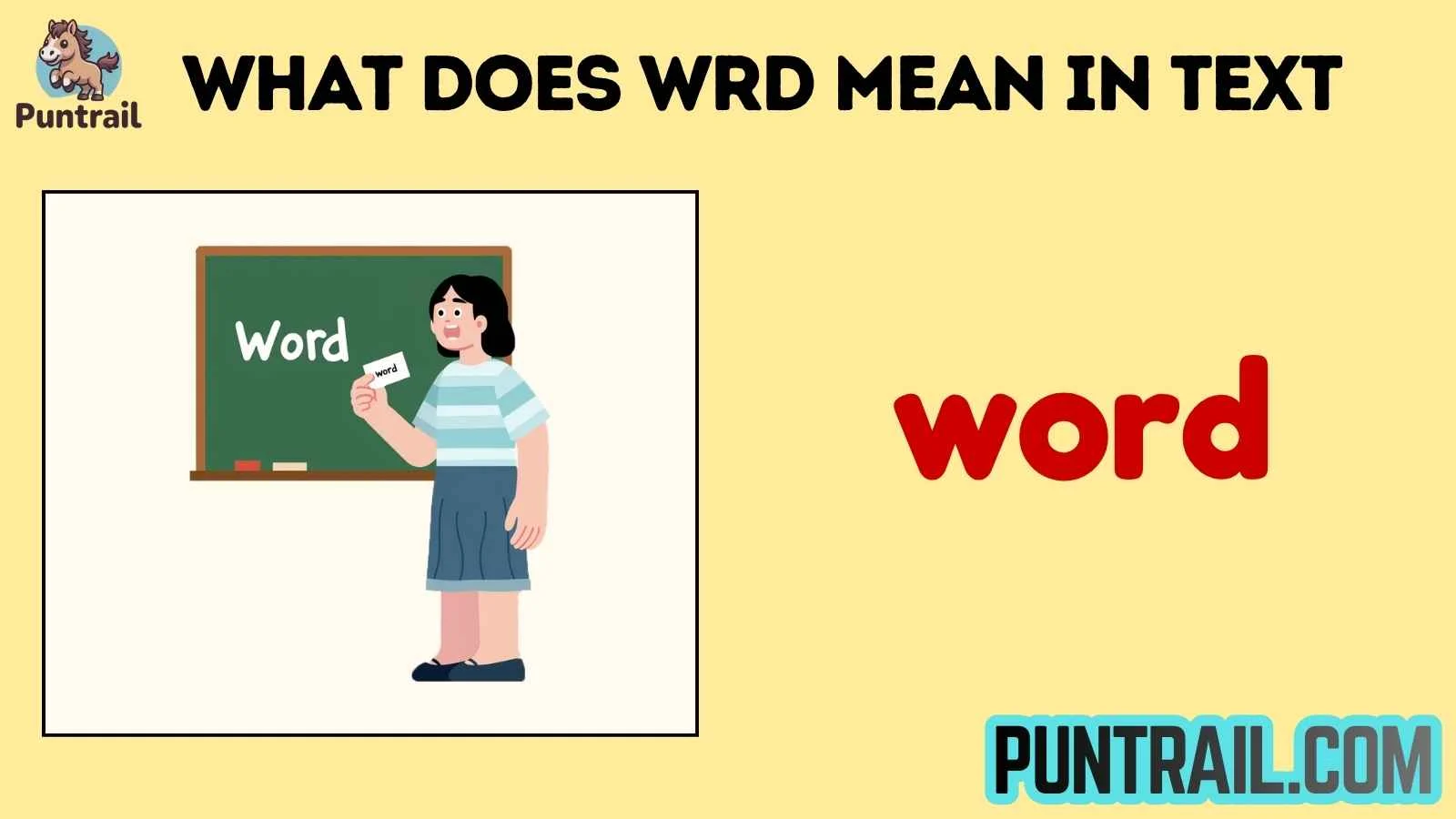
“Wrd” is internet and texting shorthand for the word “word.” It’s typically used as:
- A way to express agreement (“yeah, totally”)
- A way to ask for confirmation (“really? is that true?”)
- A casual acknowledgment (“okay, got it”)
- An expression of mild surprise or disbelief
Think of it as a tiny, flexible tool that changes shape depending on the sentence around it — kind of like how “cool” can mean a dozen different things depending on your tone. 🎭
Here’s a quick real-life example:
Friend 1: “Bro I just got accepted into the internship!” Friend 2: “wrd?? 😳”
In that exchange, “wrd” clearly means “seriously? for real?” it’s excitement mixed with disbelief.
Now compare that to this one:
Friend 1: “We’re meeting at 6 instead of 7.” Friend 2: “wrd, got it.”
Here, “wrd” simply means “okay, understood.” Same three letters, totally different vibe.
The Origin of “WRD”: Where Did This Slang Come From? 🕰️
To really understand “wrd,” we need to rewind the clock a bit because this abbreviation didn’t just appear out of nowhere.
“Wrd” is a shortened spelling of “word,” and “word” itself has a long history as a slang expression, especially rooted in African American Vernacular English (AAVE) and hip-hop culture dating back to the 1980s and 1990s. Back then, saying “word” or “word up” was a way of saying “that’s true” or “I hear you” almost like a verbal handshake confirming that someone’s statement was real and respected.
Over the decades, this phrase made its way into mainstream pop culture through music, movies, and everyday conversation. Eventually, when texting and instant messaging became the dominant way people communicated, users naturally started trimming down words to save time and keystrokes. “Word” became “wrd,” joining a huge family of clipped slang like:
| Full Word | Texting Version |
|---|---|
| Word | Wrd |
| Because | Bc / Cuz |
| Though | Tho |
| Probably | Prolly |
| Really | Rlly |
This pattern removing vowels to shorten a word while keeping it recognizable is actually really common in digital communication. It’s fast, it’s efficient, and honestly, it just feels more casual. 🔤
So when you type “wrd,” you’re not creating something new you’re continuing a decades-long tradition of slang evolution, just with fewer letters.
Different Meanings of WRD (Context Matters!) 🧩
Here’s the thing about “wrd” it’s not a one-size-fits-all abbreviation. Context completely changes what it means, and that’s actually part of what makes it fun to use.
Let’s break down the main meanings:
1. WRD as “Really?” or “Is That True?” 😲
This is probably the most common modern usage, especially among Gen Z and younger millennials. When someone shares surprising or unexpected news, “wrd” is a quick way to check if they’re being serious.
Example:
“I saw your ex at the mall with someone new.” “wrd?”
2. WRD as “I Agree” or “Facts” ✅
Sometimes “wrd” is used almost like a stamp of approval — confirming that you fully agree with what was just said.
Example:
“This new phone update is way too slow.” “wrd, it’s been lagging all day.”
3. WRD as a Casual Greeting or Filler 👋
In some casual chats, especially between close friends, “wrd” can function almost like a verbal shrug or a light acknowledgment similar to saying “yeah” or “mhm.”
4. WRD as Short for “Weird” (Less Common) 🤔
This one trips a lot of people up. In rare cases, especially in fast typing or typos, “wrd” might just be a lazy abbreviation for the actual word “weird.” Context is everything here if someone says “that’s so wrd,” they probably mean “weird,” not “word.”
Here’s a simple table to keep things clear:
| Meaning | Example Sentence | Vibe |
|---|---|---|
| Really? / For real? | “wrd? no way!” | Shock, disbelief |
| I agree / Facts | “wrd, that’s exactly what I said” | Agreement |
| Okay / Got it | “wrd, see you at 6” | Acknowledgment |
| Weird (rare) | “that’s kinda wrd tbh” | Confusion, oddity |
How Is WRD Used on Different Platforms? 📲
Slang doesn’t behave the same way everywhere. The tone of “wrd” can shift slightly depending on where it’s being used.
On Text Messages (SMS/iMessage) 💌
In private texting, “wrd” tends to feel more personal and emotionally expressive — often used between close friends reacting to gossip, news, or plans.
On Snapchat 👻
Snapchat conversations move fast and disappear quickly, so “wrd” fits right in as a quick, low-effort response that keeps the chat flowing without slowing things down.
On Instagram & TikTok Comments 🎥
Here, “wrd” often shows up as a reaction to a relatable post, almost like saying “this is so true” or “big facts.” You’ll frequently see it paired with laughing or crying emojis.
On Twitter/X 🐦
On this platform, “wrd” sometimes appears in quote-tweets or replies expressing genuine surprise at a piece of news or an opinion.
In Gaming Chats 🎮
Among gamers, “wrd” can be used quickly during matches to confirm a callout or agree with a teammate’s strategy — speed matters, and three letters beat four.
WRD vs Similar Slang Terms: What’s the Difference? 🔍
It’s easy to confuse “wrd” with other slang terms that feel similar. Let’s clear up the confusion.
- “Wrd” vs “Word up” – “Word up” is the fuller, more old-school version, often used to show strong emphasis or excitement. “Wrd” is the quicker, more neutral cousin.
- “Wrd” vs “Fr” (For Real) – “Fr” leans more strongly toward disbelief or emphasis, while “wrd” can be softer and more flexible.
- “Wrd” vs “Bet” – “Bet” usually confirms a plan or agreement to do something, while “wrd” is more about acknowledging information.
- “Wrd” vs “Deadass” – “Deadass” emphasizes seriousness, almost like “I’m not joking,” while “wrd” is more of a light response.
Think of these as cousins in the same slang family related, but each with its own personality. 👨👩👧👦
Real-Life Examples of WRD in Conversations 💬
Sometimes the best way to understand slang is simply seeing it in action. Here are a few realistic conversation snippets:
Example 1 – Excited Reaction
A: “I just got tickets to the concert!! 🎤” B: “wrdddd let’s gooo”
Example 2 – Casual Agreement
A: “This weather is honestly perfect today.” B: “wrd, I don’t even need a jacket.”
3 – Mild Disbelief
A: “They’re closing the store down the street.” B: “wrd? since when?”
Example 4 – Quick Confirmation
A: “Meeting moved to Friday.” B: “wrd noted.”
Notice how in every single example, the tone of “wrd” shifts slightly, even though the spelling never changes. That’s the beauty (and occasional confusion) of texting slang. 😄
Why Do People Use Abbreviations Like WRD? 🧠
You might be wondering why not just type the full word? It only takes one extra letter, after all. But there’s actually some interesting psychology and digital culture behind this habit.
- Speed matters. Fast-paced conversations, especially in group chats, reward quick responses.
- Casual tone signals closeness. Using shortened slang often shows familiarity and comfort between people.
- Identity and belonging. Using trendy slang helps people feel connected to online culture and their peer groups.
- Typing efficiency. On small mobile keyboards, every saved letter genuinely adds up over hundreds of daily messages.
As one long-time internet linguist once put it in a casual interview, digital slang isn’t about laziness it’s about efficient emotional shorthand. We’re compressing feelings into fewer characters without losing meaning. 💡
Common Mistakes People Make With WRD ⚠️
Even though “wrd” seems simple, people misuse it more often than you’d think. Here are a few common slip-ups:
- Using it in formal settings – Typing “wrd” in a work email or professional message can come across as unprofessional. Save it for casual chats only. 🚫
- Confusing it with “weird” – Always check the context before assuming which meaning applies.
- Overusing it – Repeating “wrd” in every single reply can start to feel repetitive or even sarcastic if unintended.
- Using it with people unfamiliar with slang – Older relatives or new coworkers might not understand it, leading to confusing exchanges.
A simple rule of thumb: if you wouldn’t say “word” out loud in that setting, don’t type “wrd” either. 👍
Should You Use WRD in Professional or Formal Writing? 📧
Short answer: no, not really. 🙅♀️
While “wrd” is perfectly fine in texting, DMs, and casual social media comments, it doesn’t belong in:
- Emails to your boss or coworkers
- School or college assignments
- Resumes or cover letters
- Business proposals or client communication
Sticking to full, clear language in professional settings shows respect for your reader and keeps your communication easy to understand especially for people unfamiliar with slang trends. Save “wrd” for friends, group chats, and casual online spaces where the tone is already relaxed. 😊
How to Respond When Someone Says WRD to You 🤝
If someone texts you “wrd?” and you’re not sure how to reply, here are a few natural responses depending on the situation:
- If they’re asking “is that true?” → reply with “yeah for real” or “nah I’m serious”
- If they’re expressing agreement → reply with “right?? exactly”
- If they seem confused → simply clarify what you meant in plain language
There’s no wrong way to respond, honestly — texting slang is flexible, and most people appreciate a natural, relaxed reply rather than an overly formal one. 💬
FAQs:
1. What does “wrd” mean in a text message? “Wrd” is texting slang for “word,” commonly used to express agreement, confirm something is true, or casually acknowledge a message.
2. Is “wrd” the same as “word up”? They’re related, but “word up” is the older, more emphatic version, while “wrd” is a quicker, more casual modern variation.
3. Can “wrd” mean “weird”? Yes, occasionally. In rare cases, especially with quick typing, “wrd” can be shorthand for “weird” instead of “word.” Context will usually make the meaning clear.
4. Is it okay to use “wrd” in professional messages? No, it’s best to avoid it in formal or professional communication. Stick to full words in emails, workplace chats, and academic writing.
5. Where did “wrd” come from? It originated as a shortened spelling of “word,” a slang term rooted in AAVE and hip-hop culture that has been used for decades to express agreement or affirmation.
Final Thoughts:
So, next time someone drops a lone “wrd?” in your chat, you’ll know exactly what’s going on.
Whether it’s a burst of disbelief, a quick nod of agreement, or a casual way of saying “got it,” this tiny three-letter abbreviation carries a surprising amount of personality. 💬
Language is always evolving, especially online, and slang like “wrd” is a perfect example of how communication adapts to fit our fast-paced digital lives. It’s playful, efficient, and deeply tied to the culture that shaped it.
Now you’re fully equipped to understand and confidently use “wrd” the next time it pops up in your messages. 🙌

I’m the writer behind PunTrail, where I simplify internet slang, text abbreviations, and modern word meanings into easy-to-understand content. I focus on creating clear, human-friendly explanations that help readers quickly understand trending terms used in chats, social media, and everyday conversations.