You’re sitting on your couch, phone buzzing in your hand. Your friend texts: “OTW, be there in 10!” 🚗💨
For a split second, you pause. What does that even mean? Are they okay? Did something happen?
Take a breath. It’s actually good news.
OTW is one of the most common texting abbreviations used today, and once you know what it means, you’ll start spotting it everywhere in group chats, Instagram DMs, Snapchat replies, even in your work Slack channel when a coworker is running a few minutes late. 😅
This guide breaks down everything you need to know about OTW, including its real meaning, where it came from, how people use it in different situations, and why it has become such a permanent fixture in modern digital communication.
By the end, you won’t just know what OTW means you’ll know exactly when and how to use it like a pro.
Let’s dive in. 👇
What Does OTW Mean?⚡
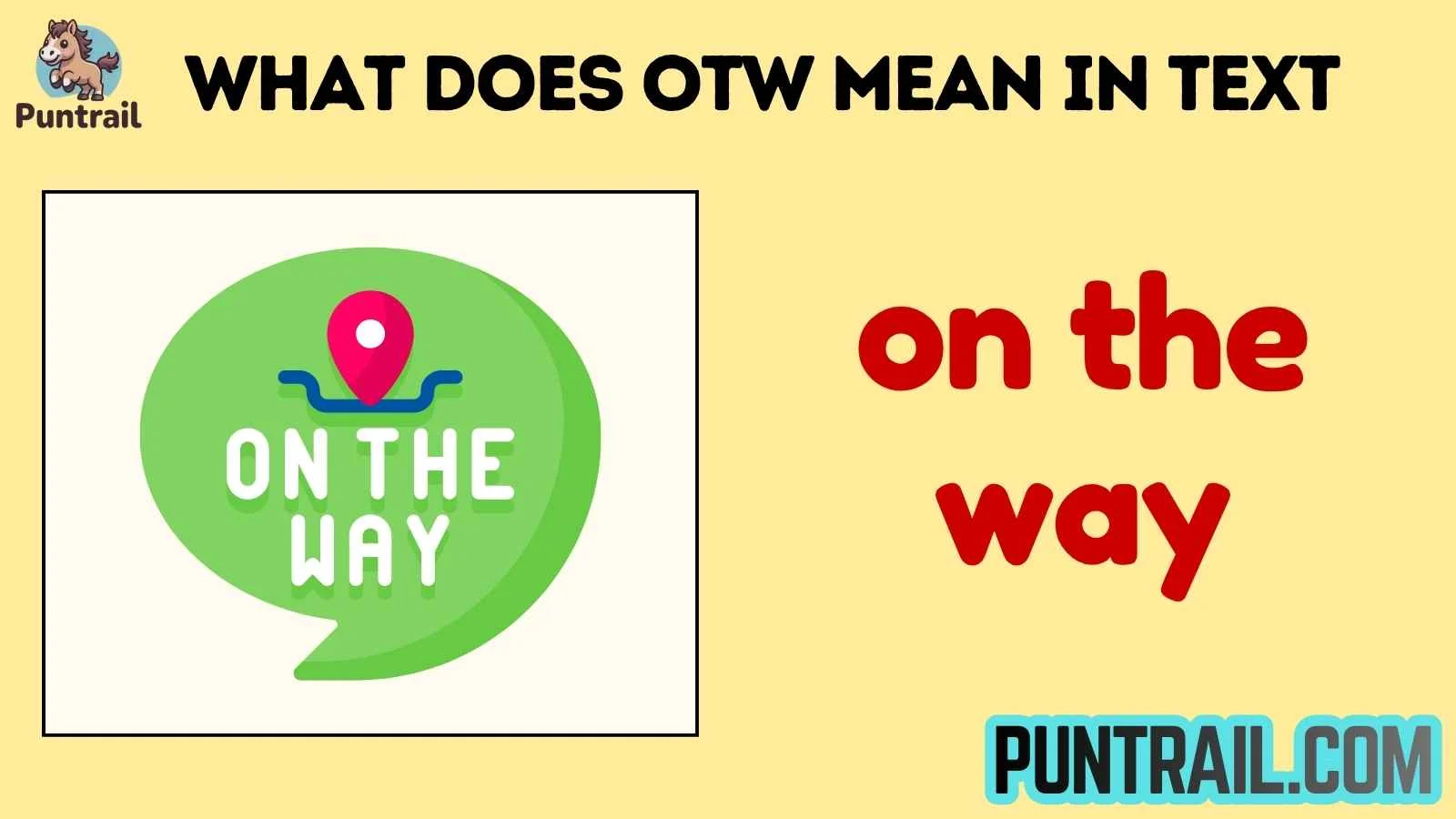
OTW stands for “On The Way.”
That’s it. That’s the whole mystery solved in three words.
When someone texts you “OTW,” they’re simply letting you know they’ve already left and are currently traveling toward a destination — whether that’s your house, a restaurant, work, or a meetup spot. It’s a quick, casual way to say “I’m coming, don’t worry, I’ll be there soon.”
Think of it as a small act of courtesy wrapped up in three letters. Instead of typing out a full sentence, people use OTW to save time while still keeping the other person in the loop. 🕒
Example:
Sarah: “Are you close?” Jake: “OTW 🚗 give me 15 mins”
Simple, right? But there’s more nuance to this little abbreviation than most people realize.
The Origin of OTW: Where Did It Come From? 🕰️
Every piece of internet slang has a story, and OTW is no exception.
The abbreviation “On The Way” has technically existed in casual speech for decades. People have always shortened phrases when talking quickly or writing notes. But OTW as a texting acronym really took off with the rise of SMS text messaging in the early 2000s.
Here’s why it caught on so fast:
- 📱 Character limits mattered. Early text messages were limited to 160 characters, so shorter phrases were king.
- ⌨️ Typing was slower. Before touchscreens and predictive text, typing on a numeric keypad (remember T9?) made every letter count.
- 💬 Instant messaging culture exploded. Platforms like AIM, MSN Messenger, and later texting apps normalized abbreviations like BRB, TTYL, and OMW/OTW.
As smartphones became mainstream in the late 2000s and social media exploded in the 2010s, OTW spread beyond texting into Twitter, Instagram, Snapchat, and gaming chats, cementing its place as a permanent part of internet shorthand.
“Language evolves where communication needs speed. OTW is proof that even three letters can carry an entire sentence’s worth of meaning.”
Today, in 2026, OTW is so widely understood that it barely even registers as slang anymore it’s just part of how people communicate quickly and casually online.
OTW vs OMW: What’s the Difference? 🤔
This is one of the most common points of confusion, so let’s clear it up right away.
You’ve probably seen both OTW and OMW used in texts. Are they different? Let’s compare:
| Abbreviation | Full Meaning | Usage |
|---|---|---|
| OTW | On The Way | Widely used across texting, gaming, and social media |
| OMW | On My Way | Slightly more personal, emphasizes “my” journey specifically |
Honestly? They mean almost exactly the same thing, and in casual conversation, people use them interchangeably. The tiny difference is that OMW feels a touch more personal (“I, specifically, am on my way”), while OTW can sometimes refer to a more general or group situation (“we’re on the way” or “the package is on the way”).
Example of the subtle difference:
“OMW to your place now!” personal, direct “The delivery is OTW.” general, object-based
Don’t stress too much about picking the “correct” one. Both are accepted, both are understood, and both get the same message across. 👍
Different Ways People Use OTW in Real Life 💬
OTW isn’t just for one situation. It flexes across all kinds of everyday scenarios. Here’s a breakdown of the most common contexts where you’ll see it pop up.
1. Texting Friends and Family 👨👩👧👦
This is the classic, original use case. Someone asks where you are, and you reply with OTW to reassure them you’re already moving.
Examples:
- “Running late but OTW, sorry!”
- “OTW now, traffic is confused today 😩”
- “Mom, I’m OTW home, be there in 20”
2. Social Media and DMs 📸
On platforms like Instagram, Snapchat, and Twitter/X, OTW often shows up in captions or replies related to travel, events, or meetups.
Examples:
- Caption on a travel photo: “OTW to Bali! ✈️🌴”
- Reply to an event invite: “OTW, save me a seat!”
3. Gaming Chats 🎮
In online gaming, especially in team-based games, players use OTW to tell teammates they’re heading to a specific location on the map.
Examples:
- “OTW to A site”
- “Enemy spotted, OTW to help you”
4. Delivery and Business Contexts 📦
Businesses, delivery drivers, and even automated text notifications now use OTW to update customers.
Examples:
- “Your Uber driver is OTW, arriving in 5 minutes.”
- “Your order is OTW! Track it here.”
5. Workplace Messaging 💼
Yes, even in professional Slack or Microsoft Teams chats, especially in more casual workplace cultures, OTW has found its way in.
Example:
- “Running 5 mins behind, OTW to the meeting room now”
Why Do People Use Abbreviations Like OTW? 🧠
You might wonder why not just type the full phrase? It’s not that much longer.
The answer comes down to a mix of psychology, convenience, and culture:
- ⏱️ Speed matters in real-time conversations. When someone is actively waiting for you, a fast reply feels more urgent and reassuring than a long, typed-out message.
- 📲 Mobile typing habits favor short text. Even with autocorrect and swipe typing, shorter messages are simply easier to send while walking, driving (please don’t text and drive!), or multitasking.
- 🌍 Shared understanding builds community. Using common abbreviations like OTW signals that you’re part of the same digital culture it’s a small, almost unconscious way of “speaking the same language” as everyone else online.
- 😌 It reduces anxiety in the moment. A quick OTW reassures the other person immediately, without making them wait for a full sentence to load or be typed.
In many ways, abbreviations like OTW aren’t about laziness — they’re about efficient emotional communication. A fast reply can genuinely calm someone down who’s wondering where you are.
How to Use OTW Correctly in a Sentence ✍️
Using OTW correctly is simple, but there are a few small style tips that can make your texts feel more natural.
Basic structure:
[OTW] + [optional location or time estimate]
Good examples:
- “OTW, 5 mins away”
- “OTW to the mall now”
- “Sorry for the delay, OTW”
Things to avoid:
- Don’t use OTW in formal writing like emails to a client or a cover letter. It reads as too casual.
- Don’t overuse it in the same conversation once you’ve said OTW, you don’t need to repeat it every message.
- Be mindful of your audience. Older relatives or professional contacts unfamiliar with texting slang might need the full phrase instead.
Quick Tip: If you’re unsure whether OTW fits the tone of your conversation, ask yourself: “Would I use other casual abbreviations like ‘lol’ or ‘brb’ with this person?” If yes, OTW will fit right in. If no, spell it out as “on my way” instead.
Common Mistakes People Make With OTW ⚠️
Even though OTW is simple, a few small mix-ups happen often. Here are the most common ones:
- ❌ Confusing OTW with OTF (which usually means “on the floor” or, in gym culture, can refer to a fitness workout brand).
- ❌ Using OTW in professional documents where it can come across as unprofessional or unclear to readers unfamiliar with texting slang.
- ❌ Forgetting context. Sending just “OTW” with no prior conversation can confuse someone who wasn’t expecting you.
- ❌ Assuming everyone knows it. While OTW is common, not everyone especially older generations or non-native English speakers instantly recognizes it.
A good rule of thumb: when texting someone new or unfamiliar with slang, it’s safer to spell things out the first time, then switch to abbreviations once you know they understand your texting style.
OTW in Pop Culture and Music 🎵
Interesting fact: OTW has made its way beyond everyday texting into song titles, lyrics, and pop culture references. Several artists have used “OTW” or “On The Way” as song titles or hooks, especially in hip-hop and R&B, where the phrase captures themes of movement, hustle, and anticipation.
This crossover into music and media is a big reason why OTW has stayed relevant and widely recognized across different age groups from Gen Z texting friends to millennials streaming music that name-drops the same abbreviation.
Similar Texting Abbreviations You Should Know 📚
Since you’re learning about OTW, here are a few related abbreviations that often show up in the same type of conversations:
| Abbreviation | Meaning |
|---|---|
| OMW | On My Way |
| BRB | Be Right Back |
| ETA | Estimated Time of Arrival |
| TTYL | Talk To You Later |
| IMY | I Miss You |
| WYD | What You Doing |
| HMU | Hit Me Up |
| RN | Right Now |
Knowing these alongside OTW will make you fluent in modern digital shorthand, whether you’re texting friends, chatting on social media, or gaming with a squad. 🎮💬
Is OTW Still Relevant in 2026? ✅
Absolutely, yes. Despite constant evolution in slang and internet culture, OTW has remained one of the most stable, widely recognized abbreviations for over a decade. Unlike some slang terms that fade quickly, OTW has staying power because:
- It’s simple and universal three letters, one clear meaning.
- It’s practical, solving a real communication need (letting someone know you’re coming).
- It’s cross-platform, used equally in texting, social media, gaming, and even automated business notifications.
- It’s generation-spanning, understood by teens, young adults, and increasingly even older users who’ve adapted to texting culture.
As texting, messaging apps, and voice-to-text technology continue to evolve, OTW is likely to remain a staple phrase for years to come. It’s efficient, it’s clear, and it just works. 💪
FAQs: ❓
1. What does OTW mean in a text message? OTW means “On The Way.” It tells someone that you have already started traveling toward a destination and will arrive soon.
2. Is OTW the same as OMW? They’re very similar. OTW means “On The Way” while OMW means “On My Way.” Both are used interchangeably in casual conversation.
3. Can I use OTW in professional emails? It’s best to avoid it in formal writing. Stick to the full phrase “on my way” or “en route” for professional or business communication.
4. Where did OTW originate? OTW grew out of early SMS texting culture in the 2000s, when character limits and slower typing methods encouraged people to shorten common phrases.
5. Does OTW always mean a person is traveling? Mostly, yes, but it can also refer to objects, like a delivery or package that is “on the way” to you.
Final Thoughts:
So, next time your phone buzzes with a text that just says “OTW,” you’ll know exactly what’s happening someone’s already headed your way, and there’s nothing to worry about. 😌
We covered a lot in this guide:
- ✅ OTW means “On The Way” a quick, casual way to say you’re coming.
- ✅ It originated from SMS texting culture in the early 2000s and grew alongside mobile technology.
- ✅ It’s used across texting, social media, gaming, delivery apps, and even workplace chats.
- ✅ It’s closely related to OMW, though each has a subtle difference in tone.
- ✅ While incredibly common, it’s best avoided in formal or professional writing.
At the end of the day, OTW is a small piece of language that captures something universal: the simple reassurance of knowing someone is coming your way. And now, you’re fully equipped to use it and understand it with confidence. 🚀

I’m the writer behind PunTrail, where I simplify internet slang, text abbreviations, and modern word meanings into easy-to-understand content. I focus on creating clear, human-friendly explanations that help readers quickly understand trending terms used in chats, social media, and everyday conversations.